


Property management is the method of creating a system that may minimize hidden and visible losses, mix isolated property clusters during a connected network, automate and speed up otherwise slow processes, maximize profits, and ultimately attain a high degree of satisfaction and happiness in tenants and patrons.
Managing rental properties today is no longer just about collecting rent and fixing issues when something breaks. Property managers and landlords now handle tenant communication, accounting, compliance, maintenance workflows, and reporting—often across multiple locations and property types.
This is where property management software plays a critical role.
Instead of juggling spreadsheets, emails, and separate accounting tools, modern property management systems bring everything into one centralized dashboard—saving time, reducing errors, and improving tenant satisfaction.
In this guide, we’ve updated the original article and expanded it into a best-in-class list of the top 10 property management software tools, covering free and paid options, small landlords to large portfolios, and residential to commercial use cases.
What is Property Management Software?
Property management software is a digital system designed to help landlords, property managers, and real estate businesses manage day-to-day property operations.
Typical features include:
- Online rent collection
- Tenant and lease management
- Maintenance requests and tracking
- Accounting and financial reporting
- Property inspections and documentation
- Owner and tenant portals
By centralizing these tasks, the software reduces manual work, improves transparency, and creates a reliable digital record—useful for audits, tax filing, and long-term planning.
Types of Property Management Software:
Depending on the mode of installation there are two types of property management applications which are installed software and cloud software.
1. Installed property management software:
This software has to be installed manually on your computer where your data is stored on a server that is on-site. The maintenance, implementation, and upgrading of this software are required to be done by an IT professional, and the data can only be accessed when you are in the office.
2. Cloud property management software:
This software doesn’t need to be installed on your computer. You can access this software by logging in to your device. You can access your data from anywhere with an internet connection as the data is stored in the cloud.
Why Use Property Management Software for a Business?
In a market as volatile as real estate, property management software is not only cost-effective but makes it convenient for you to perform all your managerial tasks. It saves you from a lot of paperwork and unnecessary software as all the important tasks can be performed using a single software.
Since cloud property management software doesn’t require you to have a single server, you can manage any quantum of your properties and employees by simply logging into your device using an internet connection. This saves a lot of time and money, which in turn will help you concentrate on other aspects of the business. Also, this software is user-friendly and has proven best management system in the field of real estate.
How Much Does a Property Management Software Cost?
Property management software is usually affordable and costs somewhere in the ballpark of $1.25 per month for a single unit to $1080 for 5000 units per month. Based on how many units have software like Rent post cost around $29 to $249 for a month. For a project which has up to 40 units Buildium costs around $40 for a month, and they also offer lower rates for projects with more than 40 units.
Some software offers a flat rate for a month, but a majority of the software’s cost depends on the number of units of the project. Some companies also offer a free monthly trial for their software, so their customers can test the product.
Pricing varies based on:
- Number of units
- Feature depth (accounting, automation, reporting)
- Portfolio type (residential, commercial, HOA)
Typical ranges:
- Free plans: $0 (limited features)
- Small portfolios: $15–$60/month
- Mid to large portfolios: $1–$5 per unit/month
- Enterprise portfolios: Custom pricing
Many tools offer free trials so users can test workflows before committing.
10 Best Property Management Software:
1. AppFolio – Best Overall & Advanced Features
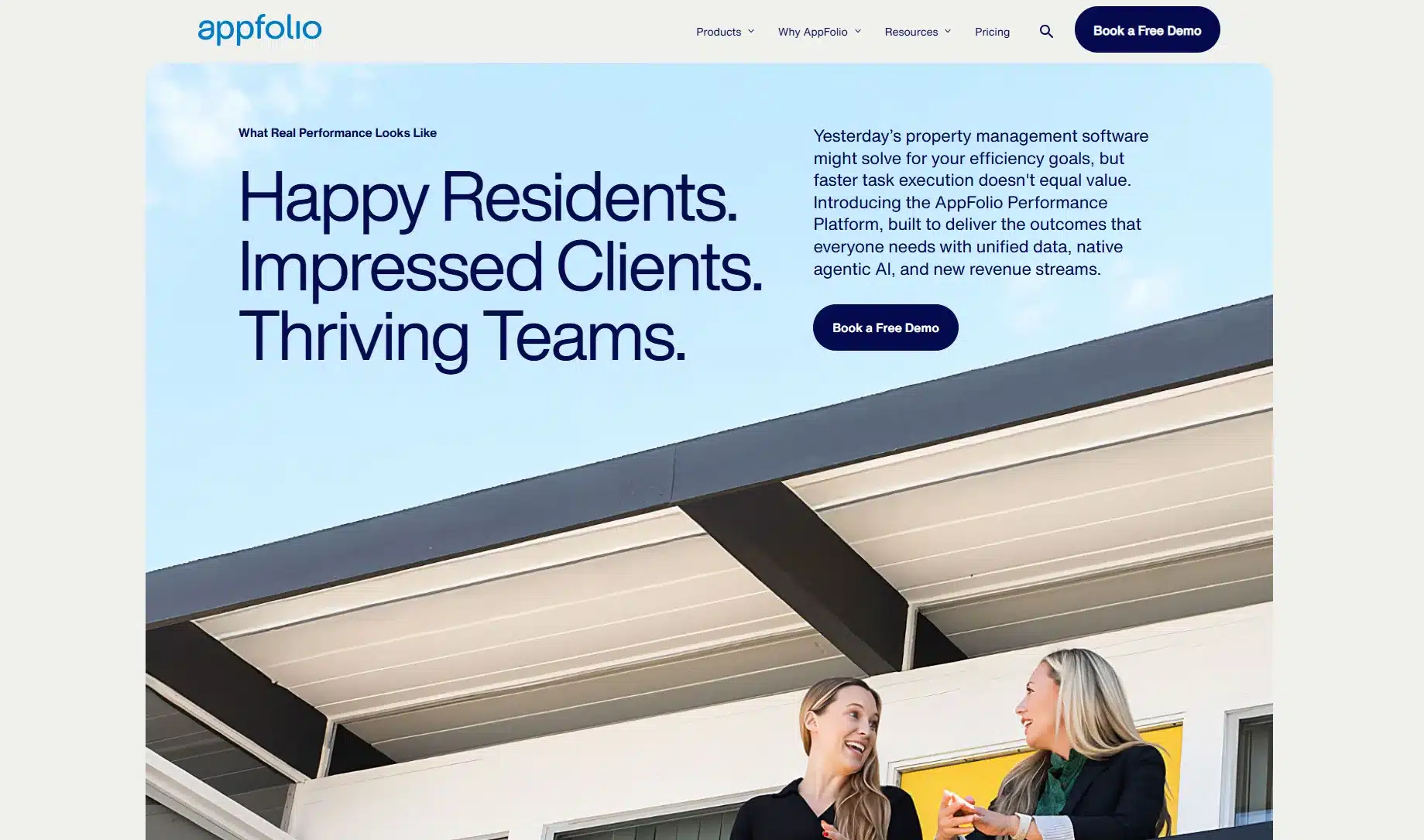
AppFolio is a cloud-based, all-in-one property management platform built primarily for professional property managers handling residential, commercial, or mixed portfolios. One of its biggest strengths is how deeply integrated the system is—leasing, rent collection, maintenance, inspections, accounting, and reporting all work from a single dashboard. AppFolio has also invested heavily in automation and AI-driven tools, such as automated leasing assistance, smart reminders, and mobile-first workflows that reduce repetitive administrative work.
From an operational perspective, AppFolio shines when managing growing portfolios where efficiency and accuracy matter. Its accounting system supports trust accounting, owner statements, and detailed financial reports, making it suitable for businesses that need audit-ready data. However, the platform comes with minimum monthly fees, which can feel expensive for small landlords. AppFolio is best suited for users who want a scalable, modern system and are ready to commit to a professional-grade solution.
Best for: Advanced automation, growing portfolios
Key features: AI leasing assistant, accounting, inspections, mobile app
Pricing: From ~$1.49 per unit/month (minimum monthly fees apply)
Pros:
- Unified all-in-one platform
- Strong mobile experience
- Automation reduces manual work
Cons:
- Higher minimum monthly cost
- Less ideal for very small landlords
2. Rent Manager – Strong All-Around Solution

Rent Manager is a highly flexible property management software designed to support residential, commercial, and mixed-use portfolios. Unlike many rigid platforms, Rent Manager allows extensive customization of workflows, reports, and user permissions, which makes it appealing to property managers with unique operational needs. It covers core areas such as accounting, rent collection, maintenance tracking, inspections, and tenant communication, all within a single system.
What sets Rent Manager apart is its adaptability. Businesses can tailor the software to match their internal processes rather than changing workflows to fit the tool. This makes it a strong long-term option for growing companies. However, the learning curve can be steeper compared to simpler tools, and pricing is not publicly listed, requiring direct contact with the sales team. Rent Manager works best for organizations that want control, depth, and scalability over simplicity.
Best for: Custom workflows, mid-to-large portfolios
Pricing: Custom (quote-based)
Pros:
- Highly customizable
- Strong reporting and accounting
- Scales well
Cons:
- Interface can feel complex
- Pricing is not transparent up front
3. Yardi – Best for Large Portfolios & Accounting
Yardi is an enterprise-level property management and real estate software platform widely used by large property operators, institutional investors, and real estate firms. Its core strength lies in advanced accounting, financial compliance, and portfolio-wide reporting. Yardi supports complex ownership structures, multi-entity accounting, and regulatory requirements that smaller tools simply cannot handle.
Because of its depth, Yardi is best suited for large residential or commercial portfolios rather than independent landlords. The system can manage thousands of units across multiple locations with detailed financial controls. However, this power comes at the cost of complexity—implementation takes time, training is required, and pricing is custom and typically high. Yardi is ideal for organizations that prioritize financial precision, compliance, and enterprise-level reporting.
Best for: Large residential or commercial portfolios
Strengths: Advanced accounting, compliance, analytics
Pricing: Enterprise custom pricing
Pros:
- Industry-leading accounting
- Handles complex portfolios
- Strong compliance tools
Cons:
- Steep learning curve
- Not suitable for small landlords
4. Entrata – Large Residential Portfolios
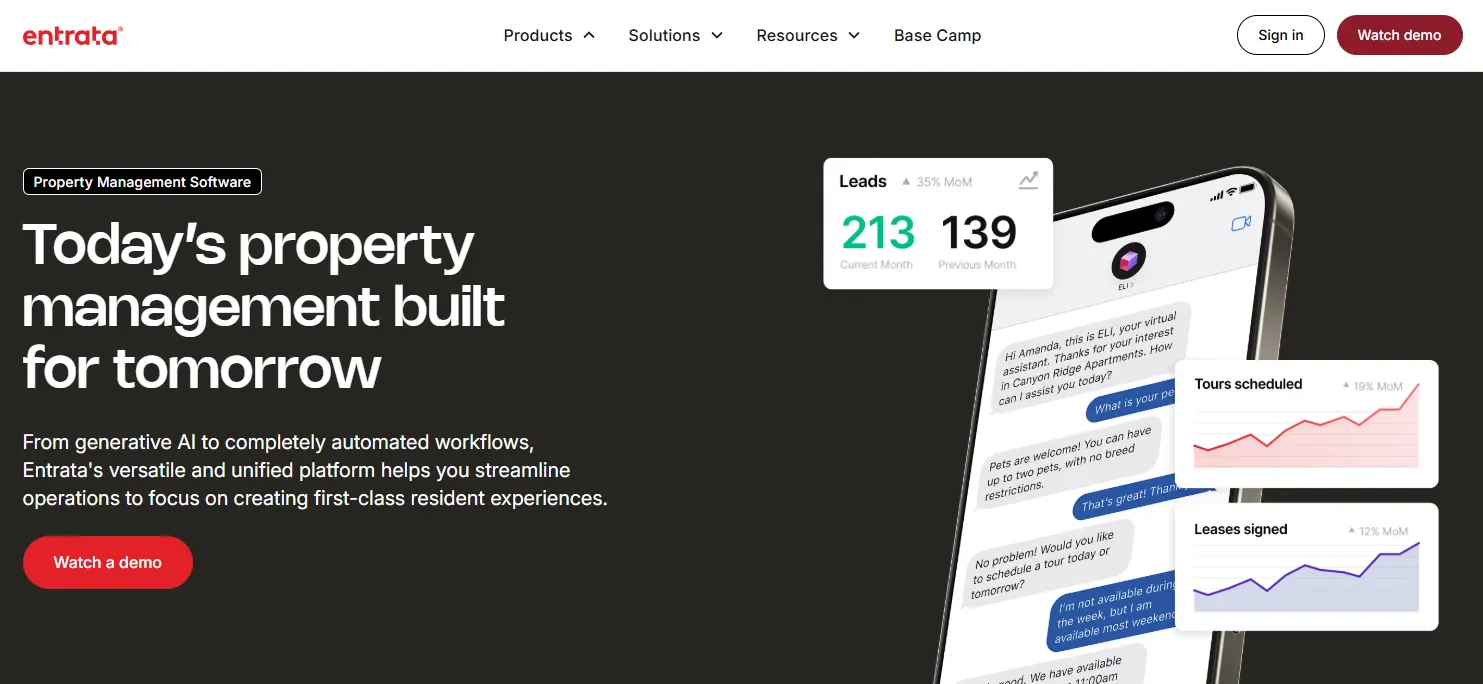
Entrata is a cloud-based property management platform focused mainly on large residential and multi-family housing communities. It provides tools for leasing, resident portals, maintenance coordination, accounting, and performance analytics. Entrata is particularly known for enhancing resident experience through online applications, payments, and communication tools.
For property managers overseeing large residential portfolios, Entrata offers strong operational efficiency and resident engagement features. Its reporting tools help track occupancy, rent trends, and operational performance across properties. However, Entrata is not designed for small landlords or commercial-only portfolios, and pricing is customized based on portfolio size. It is best suited for established residential property management companies.
Best for: Multi-family housing operators
Pros: Resident portals, leasing automation
Cons: Limited use outside residential
5. RealPage – Deep Reporting & Enterprise Insights
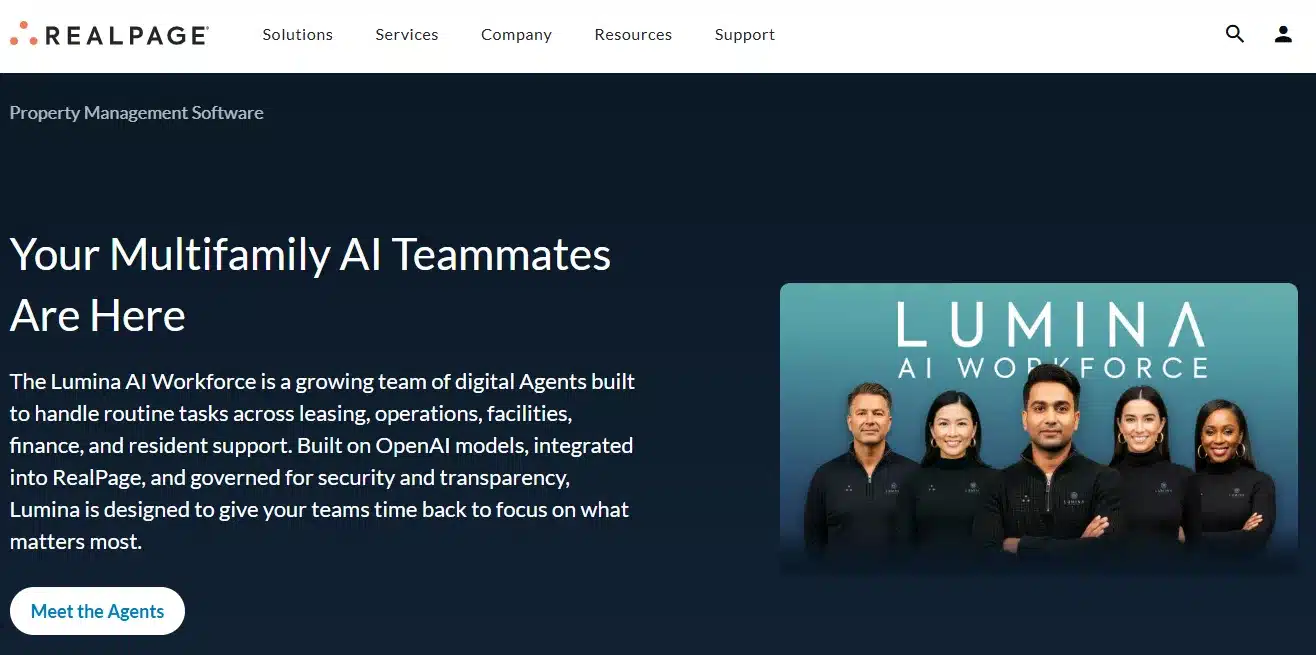
RealPage is an enterprise-focused property management and analytics platform designed for large-scale real estate operations. The software places heavy emphasis on data-driven decision-making, offering advanced reporting, market analytics, and operational insights. It is commonly used by institutional investors and large property management firms managing extensive portfolios.
While RealPage excels in analytics, compliance, and reporting depth, it is not designed for simplicity. The platform can feel overwhelming for smaller teams and requires onboarding and training. Pricing is enterprise-level and customized, making it unsuitable for small or mid-sized landlords. RealPage is best for organizations that rely heavily on data and performance analytics to guide decisions.
Best for: Institutional and enterprise portfolios
Pros: Advanced insights, compliance
Cons: Expensive and complex
6. Buildium – Best for Mixed Portfolios
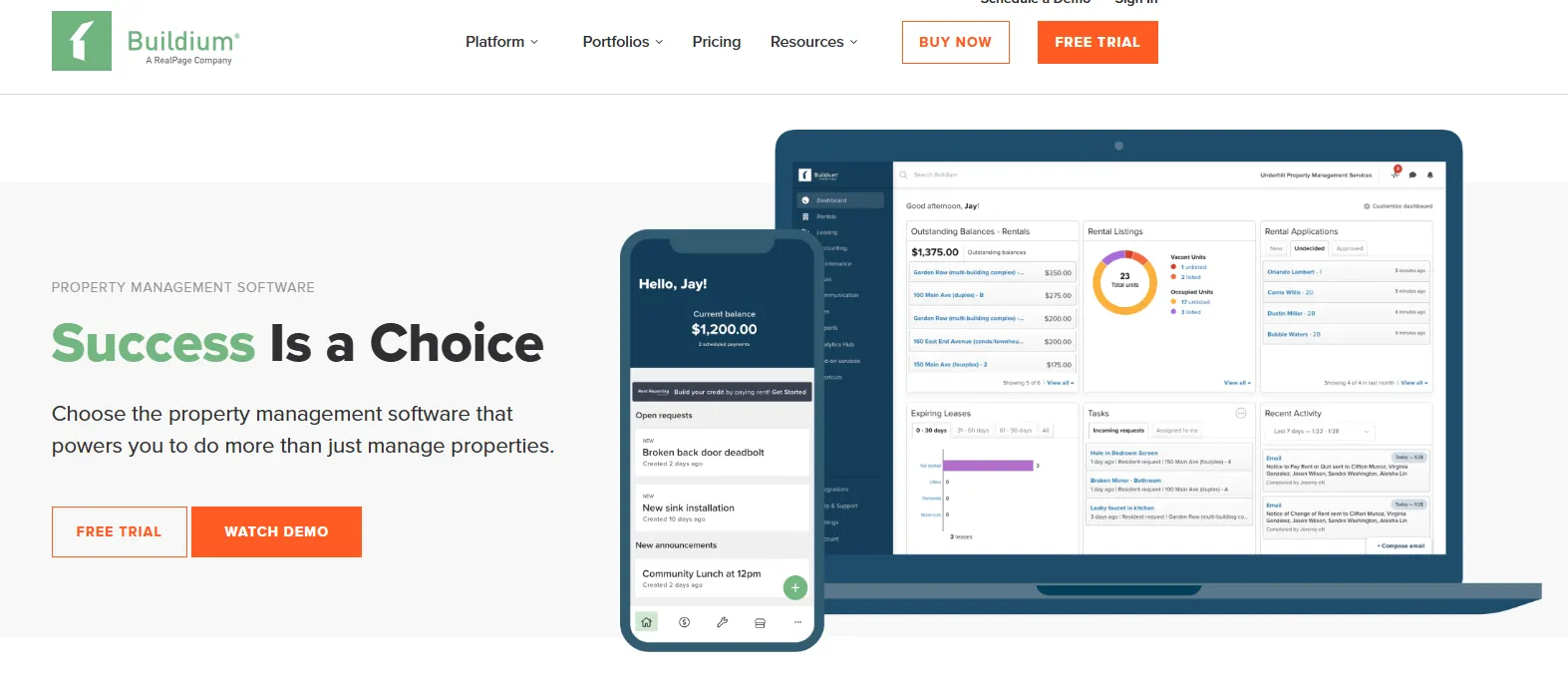
Buildium is a cloud-based property management software that balances usability with professional-grade features. It supports residential, commercial, and HOA management, making it a popular choice for managers handling mixed portfolios. Buildium includes tools for rent collection, accounting, maintenance tracking, tenant portals, and owner reporting.
One of Buildium’s strengths is its relatively intuitive interface compared to enterprise tools, which makes onboarding easier for teams. Its pricing starts at a monthly base fee, which may feel high for very small landlords but reasonable for professional managers. While Buildium occasionally introduces interface changes that require adjustment, it remains a dependable option for mid-sized property management businesses.
Best for: Mixed residential & commercial portfolios
Pricing: From ~$55/month
Pros
- Easy to use
- Good tenant and owner portals
Cons
- Feature updates can disrupt workflows
7. Propertyware – Best for Single-Family Homes
Propertyware is specifically designed for managing single-family rental portfolios, which differentiates it from many general-purpose property management tools. The platform offers customizable workflows, strong landlord-tenant communication tools, accounting features, and maintenance tracking tailored to single-family operations.
Propertyware allows managers to configure the system according to their business needs, which is helpful for companies managing dispersed properties. However, compared to newer platforms, the interface may feel dated, and some advanced features are limited unless you upgrade to higher plans. Propertyware works best for managers focused primarily on single-family homes rather than large apartment complexes.
Best for: Single-family property managers
Pros: Customization, landlord-tenant communication
Cons: Interface can feel dated
8. Avail – Free Option for Small Landlords
Avail is a landlord-focused property management platform built for individuals managing a small number of rental units. It offers essential tools such as online rent collection, tenant screening, lease templates, and property listings, all within a clean and simple interface. Avail’s free plan makes it particularly attractive for first-time or DIY landlords.
While Avail is easy to use and cost-effective, it does not offer the advanced accounting, automation, or reporting features needed for larger portfolios. Transaction delays and notification settings may also feel aggressive to some users. Avail is best for landlords who want a straightforward, low-cost way to manage rentals without complexity.
Best for: DIY landlords
Pricing: Free basic plan
Pros
- Free rent collection & listings
- Easy setup
Cons
- Limited advanced features
9. TenantCloud – Best Budget Option
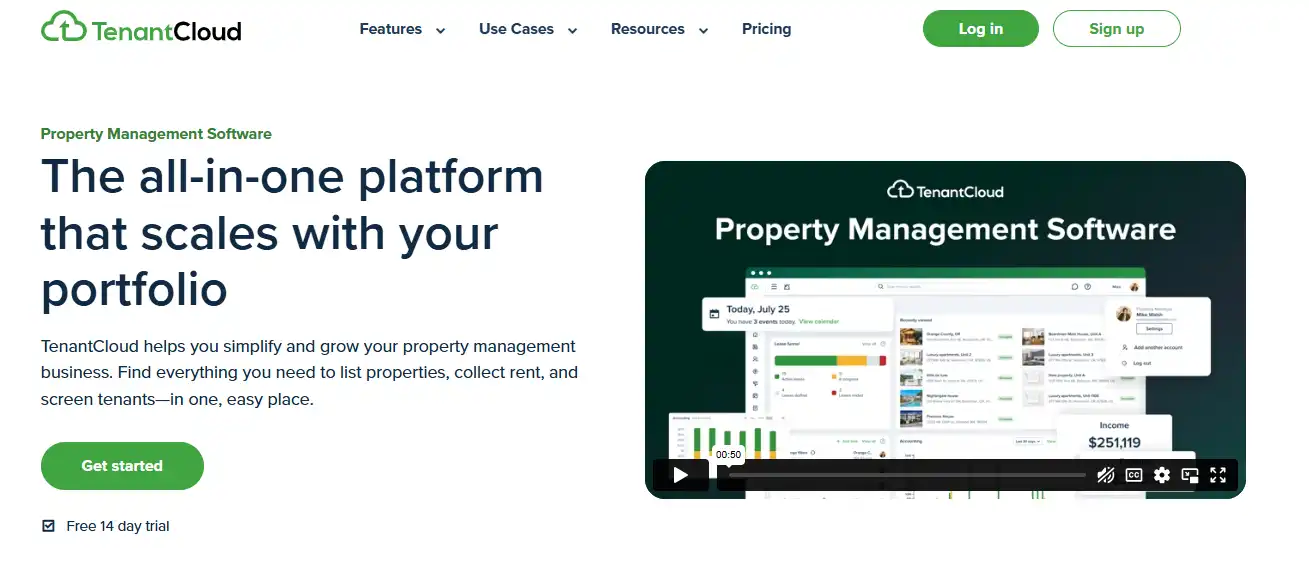
TenantCloud is a cloud-based property management system aimed at landlords, small businesses, and independent property managers. It offers rent collection, tenant communication, document storage, and basic accounting features. The platform provides both free and affordable paid plans, making it accessible to users with limited budgets.
TenantCloud is easy to set up and flexible in pricing, but lower-tier plans come with reporting and support limitations. Phone support is not always available, and inspection tools are relatively basic. Despite this, TenantCloud is a practical choice for landlords who want control over their properties without committing to expensive enterprise software.
Best for: Budget-conscious users
Pricing: Free to paid tiers
Pros
- Affordable plans
- Cloud-based access
Cons
- Limited reporting on lower tiers
10. Innago – Simple & Free for Landlords
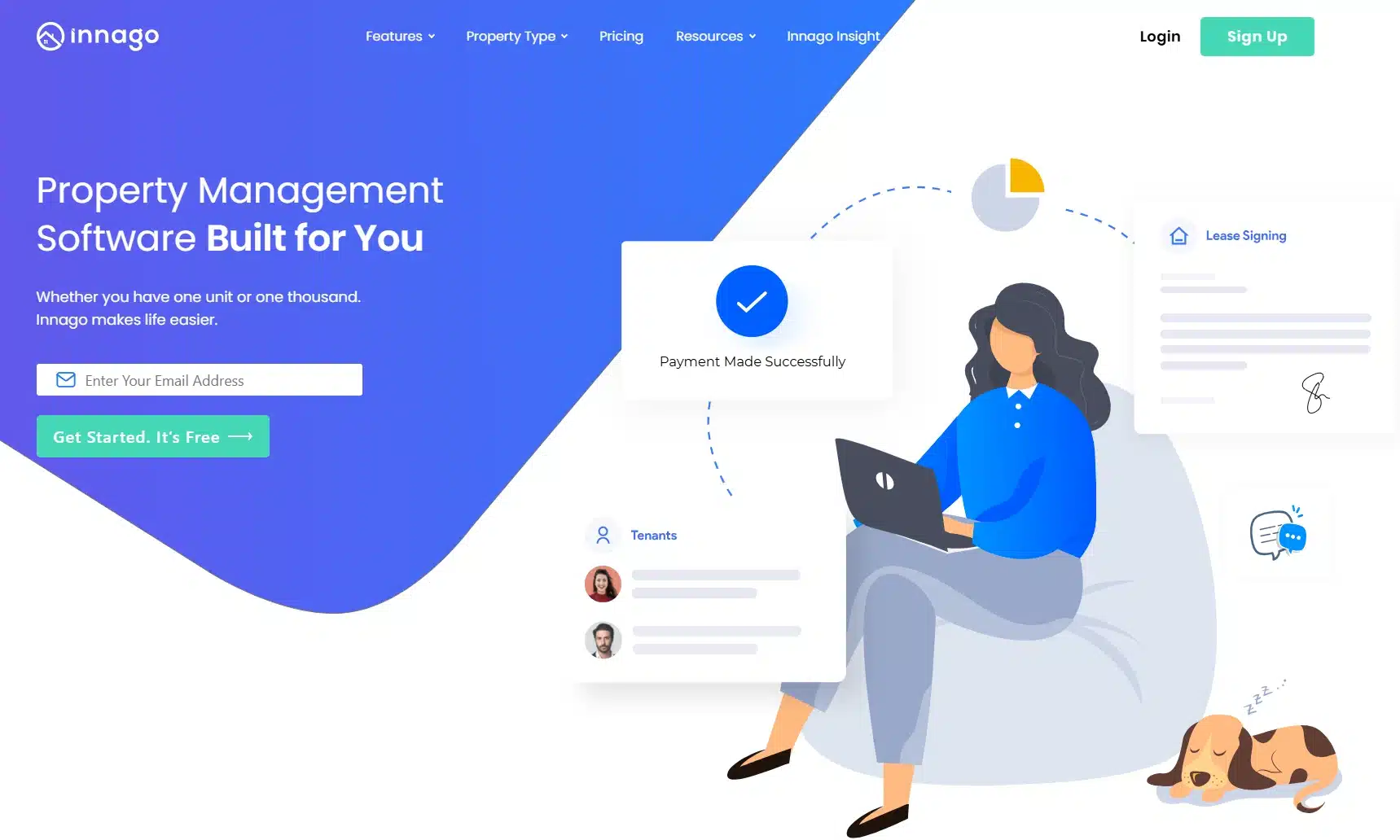
Innago is a free, cloud-based property management platform designed to cover essential landlord needs without monthly subscription fees. It includes rent collection, lease management, maintenance requests, and tenant communication tools. The platform is intentionally simple, making it easy for landlords to get started quickly.
Innago’s simplicity is both its strength and limitation. While it works well for basic property management tasks, it lacks advanced accounting, deep reporting, and complex automation features. There are also fewer third-party integrations compared to paid platforms. Innago is best for landlords who want a clean, no-cost solution for managing a small rental portfolio.
Best for: Free landlord management
Pros: No monthly fees
Cons: Fewer integrations
How to Choose the Right Property Management Software
Ask yourself:
- How many units do I manage today—and in 2 years?
- Do I need advanced accounting or basic tracking?
- Residential, commercial, or mixed portfolio?
- Do I want a free tool or a scalable paid platform?
Small landlords benefit from free tools like Avail or Innago.
Growing portfolios should consider Buildium or Rent Manager.
Large enterprises need Yardi, Entrata, or RealPage.
Final Thoughts
Property management software is no longer optional—it’s essential for accuracy, efficiency, and long-term scalability. Cloud-based platforms have made it easier than ever to manage properties from anywhere while improving tenant and owner experience.
The best software is not the most expensive one—but the one that fits your portfolio size, property type, and workflow needs.
FAQ’s:
1) Avail
2) Buildium
3) Appfolio
4) Hostyapp
5) Rentmanager
6) Tenantcloud
7) Propertyware
To efficiently manage the functions of property owners, landlords, and managers. It facilitates their users to closely monitor the accounting and bookkeeping functions and generate reports for property-related activities.
Property management includes leasing, tenant management, rent collection, property monitoring, maintenance, utility bill payments, inventory checks, renovation, document handling, and additional services available at extra cost.