


Are you small or medium businesses and looking for best VOIP service providers? This article is for you.
Voice Over IP is a commonly used technology that sends analog data (voice) to long distances via internet by converting them to equivalent digital signals. Thus we can make calls to landlines, mobiles or to any devices at a much cheaper rate than traditional analog formats. VOIP has overturned the traditional communication systems and very important part of collaboration system for any startup. In fact, it enhance the productivity of businesses working with offshore clients require to use VOIP software’s to make calls over internet. Thus by making calls over the internet via VOIP , we are cutting the expenses of normal tele call charges and replacing them with calls over internet that comes only one tenth of normal phone calls.
Important factors to consider while selecting VOIP service providers:-
# Free features – Most VOIPs services offers common free features like call recording, call tracking etc. Also have a check on how much payment has to be made for extra usage. Call waiting, user identification are also many times offered as free by VOIP service providers.
# Experience – While selecting a VOIP use the test profile to ensure there’s no lag for the calls made to distant places. We strongly recommend testing few calls to the locations you required to use VOIP calling. It will help you to experience the quality of the services over a distant call.
# User Reviews – Check for authenticity and reference of the particular voip business by visiting trusted review websites. This could be a vital factor on your search for the best VOIPs and can avoid any issues may arise in the future.
# Technical Support – Support is the very important factors while hiring any VOIP services as it should be quick and handy when you stuck anywhere.
# VOIP Security – Security is the most important factor you need to consider while purchasing VOIP system. It is also important for you to do security audit of your network before you implement VOIP system.
# Integrations: Look for CRM, helpdesk, and calendar integrations that match your existing tools — this saves real time day to day
# Total cost: Factor in add-ons like international minutes, call recording, analytics, and premium support beyond the advertised starting price.
Once you are families with the specified factors, you are ready move with your purchase process. To make your job easier, we have listed out few popular VOIP service providers suitable for small or medium businesses. Here is the list for you:
#1 Ring Central – Best for Enterprise communication
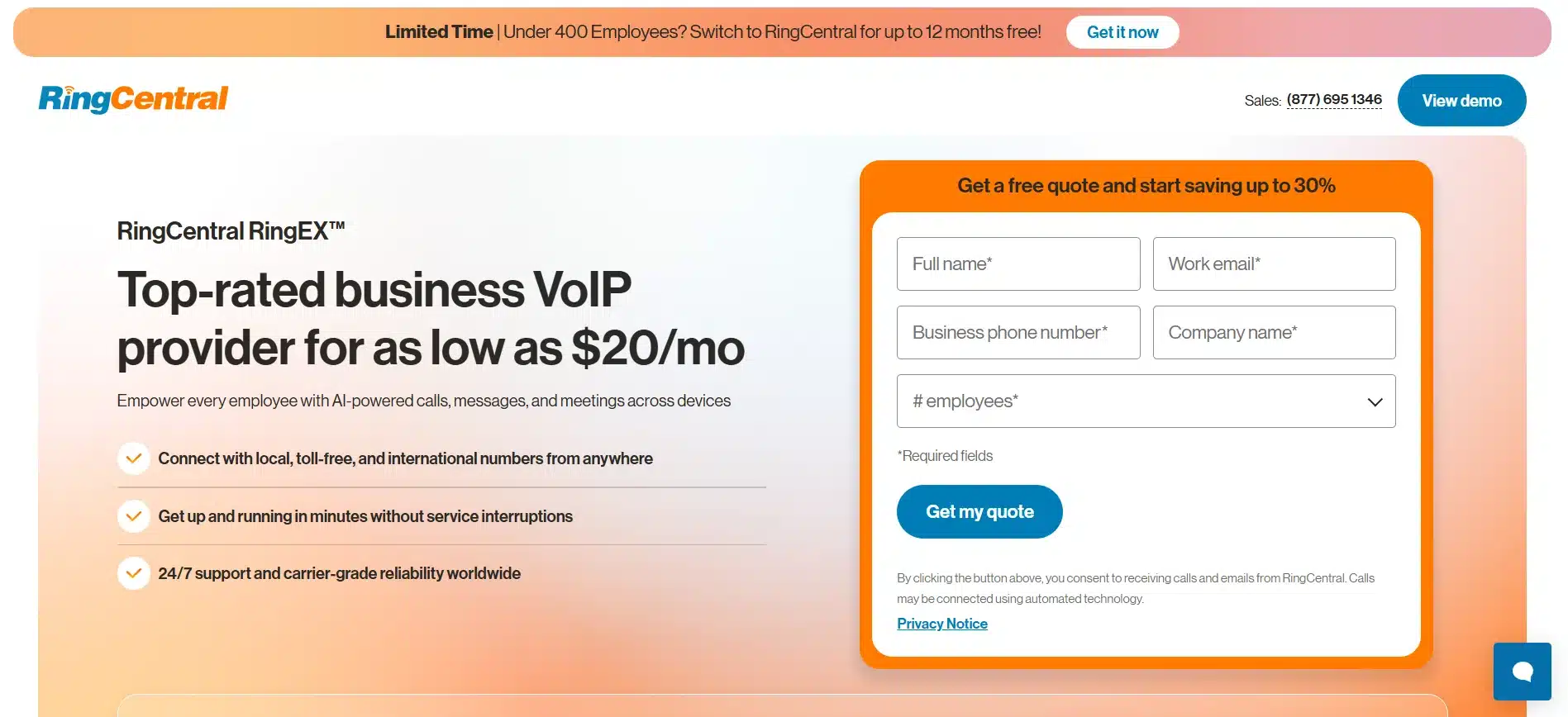
RingCentral is a leading cloud-based VoIP and unified communications platform designed for businesses of all sizes, especially medium and large enterprises. It offers business calling, messaging, video meetings, contact center solutions, mobile apps, and integrations with popular business tools. RingCentral helps companies reduce dependence on traditional PBX systems while providing scalable communication solutions. It supports IP phones, desktop applications, and mobile devices, making it a strong choice for organizations needing reliable and flexible business communication.
Best for: Enterprise communication & complete business phone system
Pricing: Custom plans; typically $20-$35+/user/month depending on plan
Pros:
- Extremely wide integration library
- Unified phone, chat, and video in one app
- Scales well from small teams to enterprise
Cons:
- Can feel feature-heavy for very small teams
- Pricing requires a quote for full detail
#2 AirCall – Best Customer Support Calling
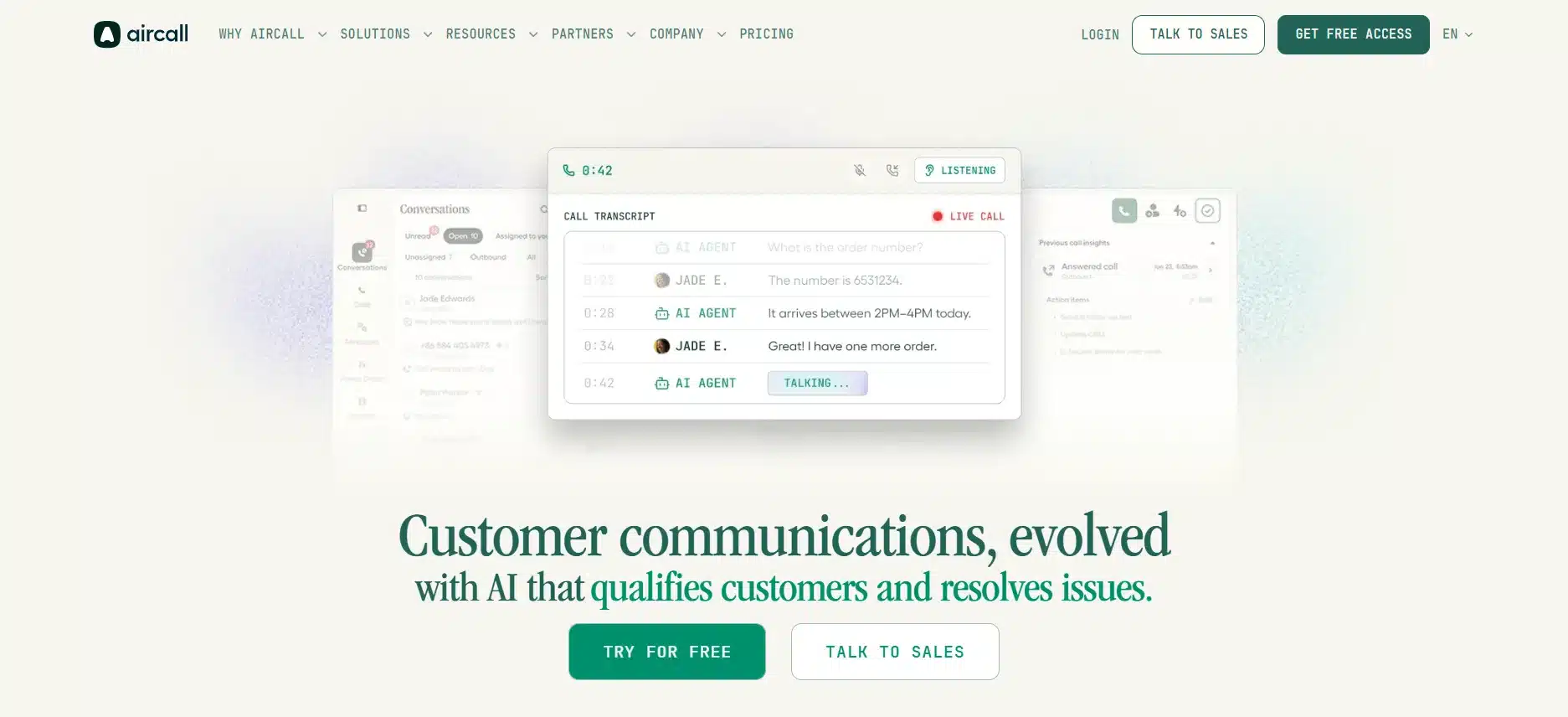
AirCall is yet another well know VOIP provider in USA and support free usage plans to test their services. AirCall supports group formation and call forwarding features. Using AirCall, a business users can get virtual phone numbers for over 30 countries, set custom ringtones, offer click to call facility and other related services. They also offer custom service reports on usage statistics. The starter plan of AirCall VOIP service comes at $30 a month per user.
Best for: Sales & customer support calling platform
Pricing: Custom plans; typically $30/user/month depending on tier
Pros:
- Strong integrations with Salesforce, HubSpot, Zendesk, Microsoft Dynamics, and Other sales
- Calls, recordings, and notes can sync directly into workflows
- Easier to use than many traditional VoIP systems
- Users can start calling from a browser, Desktop app, or Mobile app
Cons:
- Expensive for Small Teams
- Less focused on full business communication
- Call Quality Depends on the internet
#3 Nextiva – Best for Uptime & Reliability
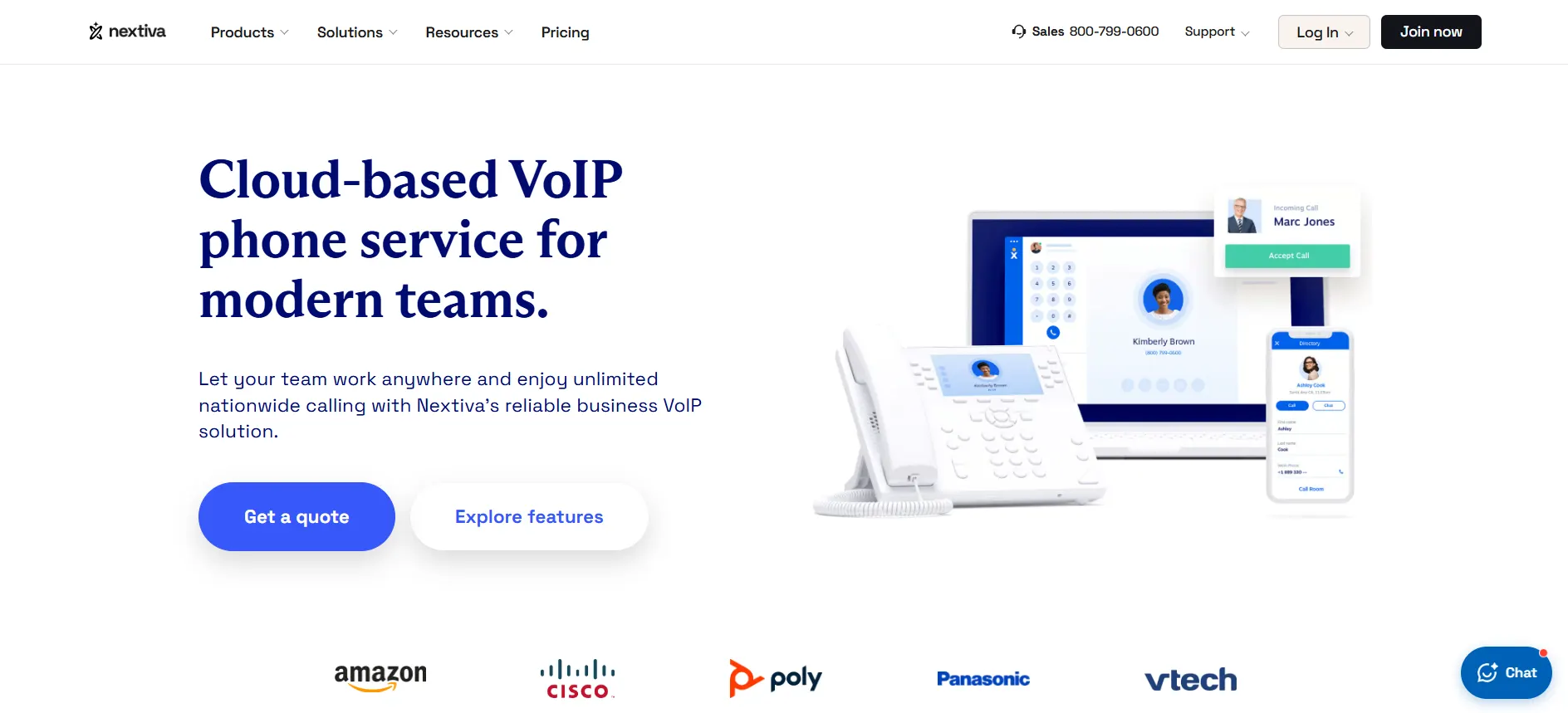
Nextiva focuses on maximum uptime and a full suite of sales and support communication tools, making it a strong pick for businesses where dropped or delayed calls have a direct cost.
Best for: Businesses prioritizing near-perfect uptime
Pricing: Roughly $19 to $42/user/month depending on plan
Pros:
- Strong reliability track record
- Full-featured plans for sales/support teams
- 24/7 phone support
Cons:
- Advanced features concentrated in higher tiers
#4 Zoom Phone – Best Value for Video-First Teams
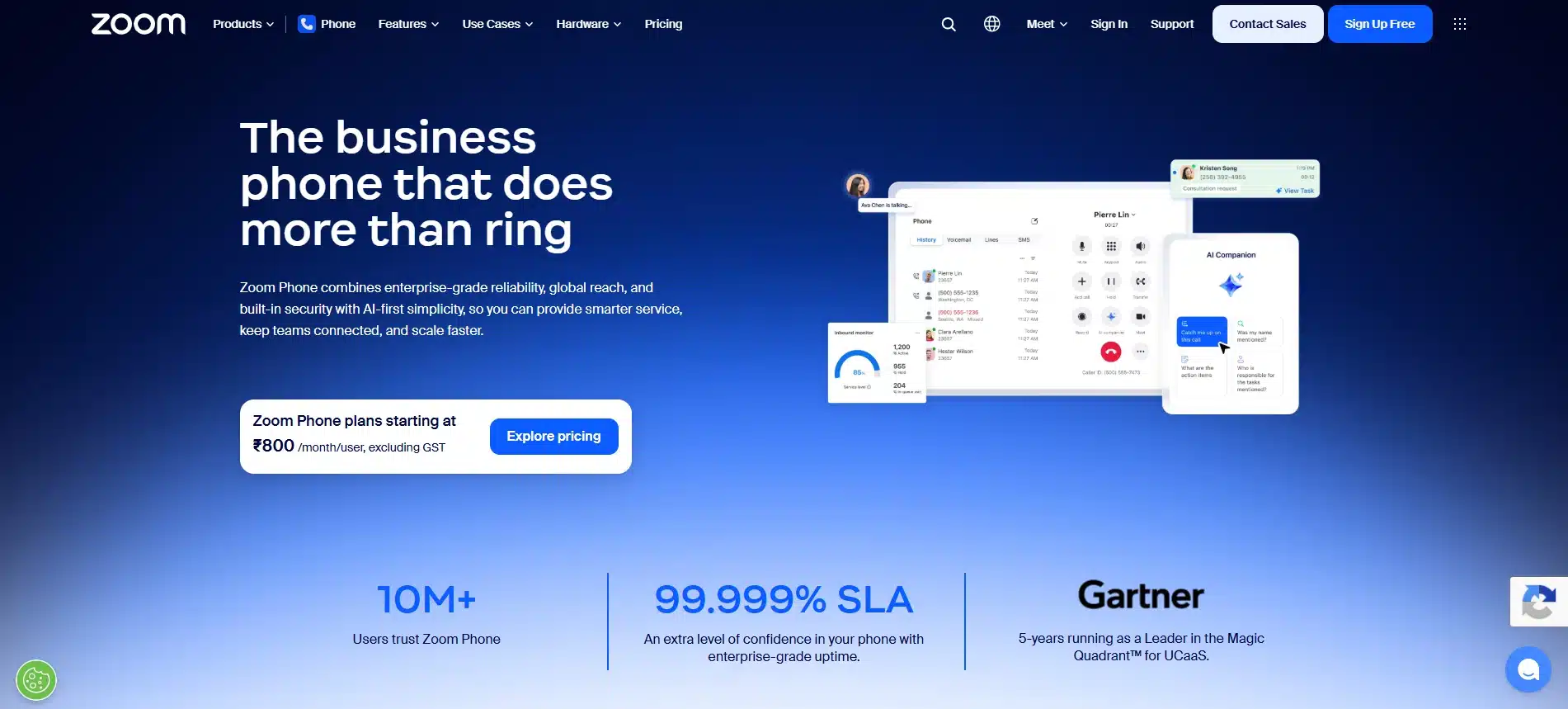
Zoom Phone works best for teams already using Zoom for meetings, it adds a full cloud phone system starting at one of the lowest per user prices in the category while still including call recording, routing, and voicemail.
Best for: Teams already invested in the Zoom platform
Pricing: From ~$1,440/user per month
Pros:
- One of the most affordable entry price points
- Familiar interface if you already use Zoom
- Solid core feature set at the entry tier
Cons:
- Most value depends on already using Zoom for meetings
#5 Ooma Office – Best Budget Pick for Small Landlord-Style Teams
Ooma Office is a practical, no-contract option for budget-conscious small businesses that want reliable calling without getting locked into long agreements.
Best for: Small businesses wanting simplicity without contracts
Pricing: Roughly $20-$30/user/month
Pros:
- No long-term contracts required
- Straightforward setup
- Affordable relative to feature set
Cons:
- Fewer advanced automation/AI features than higher-tier competitors
#6 Grasshopper – Best for Solopreneurs
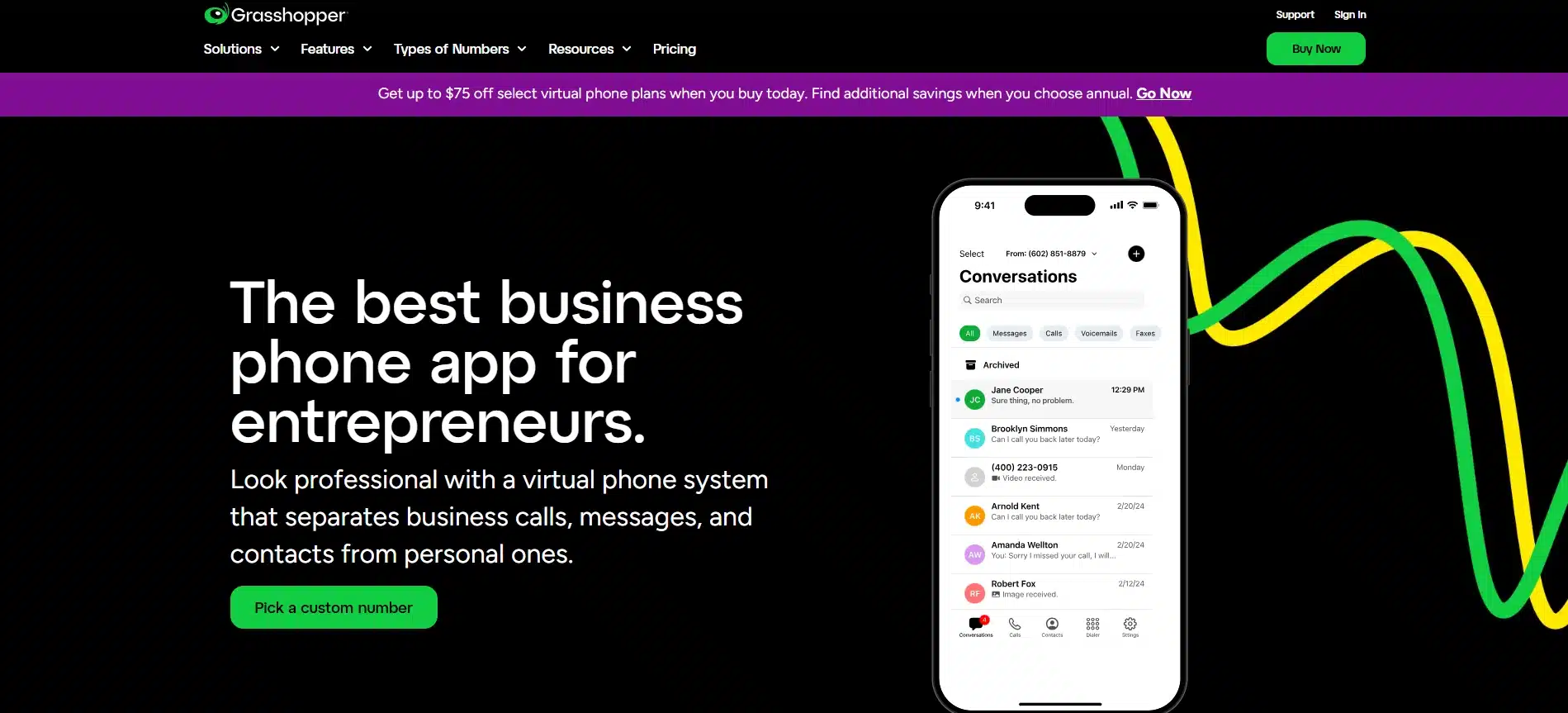
Grasshopper is built for solopreneurs or very small teams who mainly need to separate business and personal calls on an existing phone, rather than adopt a full VoIP desk-phone system.
Best for: Solopreneurs and one-person businesses
Pricing: Entry plans typically under $20/month
Pros:
- Simple setup, no new hardware needed
- Good for keeping business/personal calls separate
Cons:
- Lacks advanced features for handling high call volumes
- Not built for support/call-center teams
#7 Telzio – Best for Small Businesses
Telzio is a cloud-based VoIP provider designed for small businesses, startups, and companies needing flexible phone systems. It offers easy setup, customizable call flows, virtual phone numbers, extensions, and integrations. Telzio supports international phone numbers and provides flexible pricing based on usage and features. It is a good choice for businesses that need a customizable VoIP solution without complex hardware requirements.
Best for: Small businesses needing flexibility and Companies with variable call volume
Pricing: Starting around $50/month for business plans
Pros:
- Flexible pay-as-you-go pricing
- Powerful call flow customization
- Strong API and integrations
- No long-term contracts required
- Good for startups and developers
Cons:
- Can become costly with heavy usage
- Setup requires technical understanding
- Limited enterprise collaboration features
- Smaller ecosystem than major providers
- Fewer advanced contact center tools
#8 GoTo Connect – Best for Global/International Calling
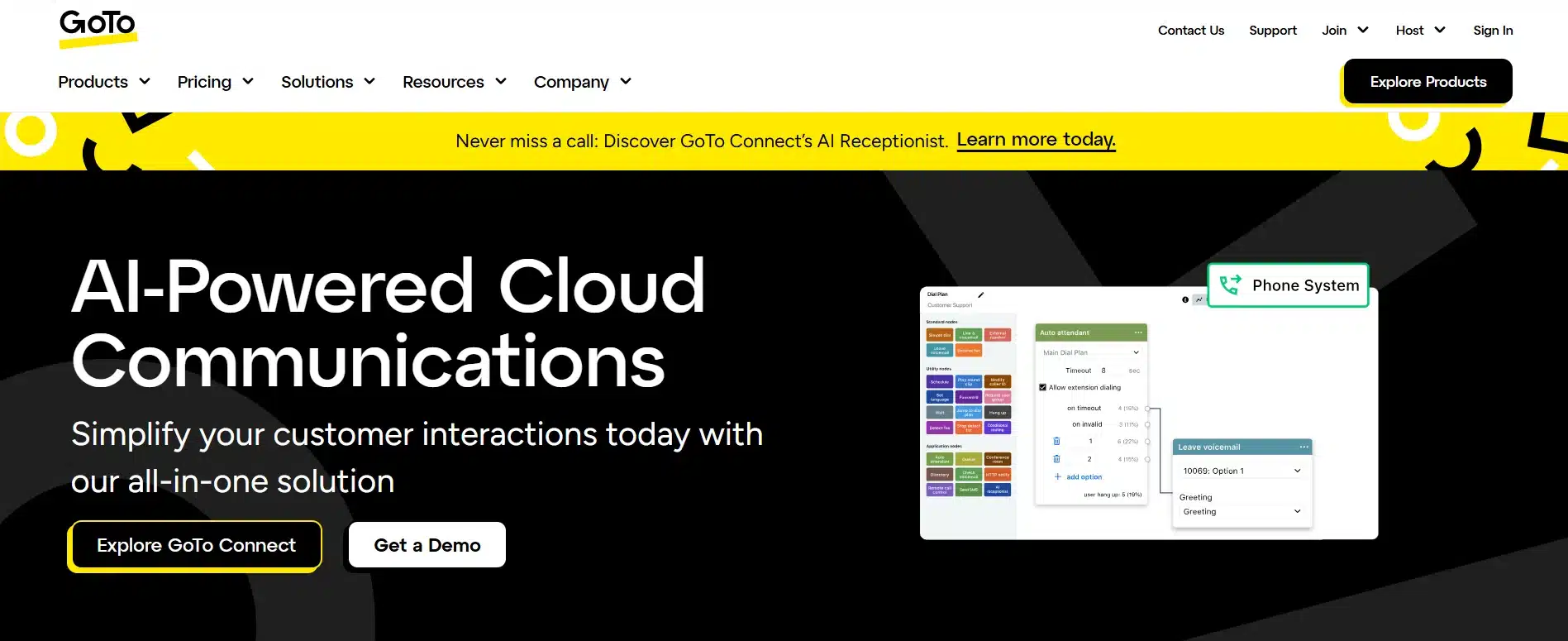
GoTo Connect is a multichannel business phone system with voice, SMS, team chat, and video meetings for up to 250 participants, including a 50+ country unlimited calling area, a strong fit for globally distributed teams.
Best for: Global businesses needing wide unlimited international coverage
Pricing: Custom quote-based pricing
Pros:
- Unlimited calling across 50+ countries included
- Full routing feature set (call queues, ring groups, auto attendants)
- Built-in analytics for calls and SMS
Cons:
- Pricing not fully transparent without a quote
#9 Vonage – Best for Pay-for-What-You-Need Scaling
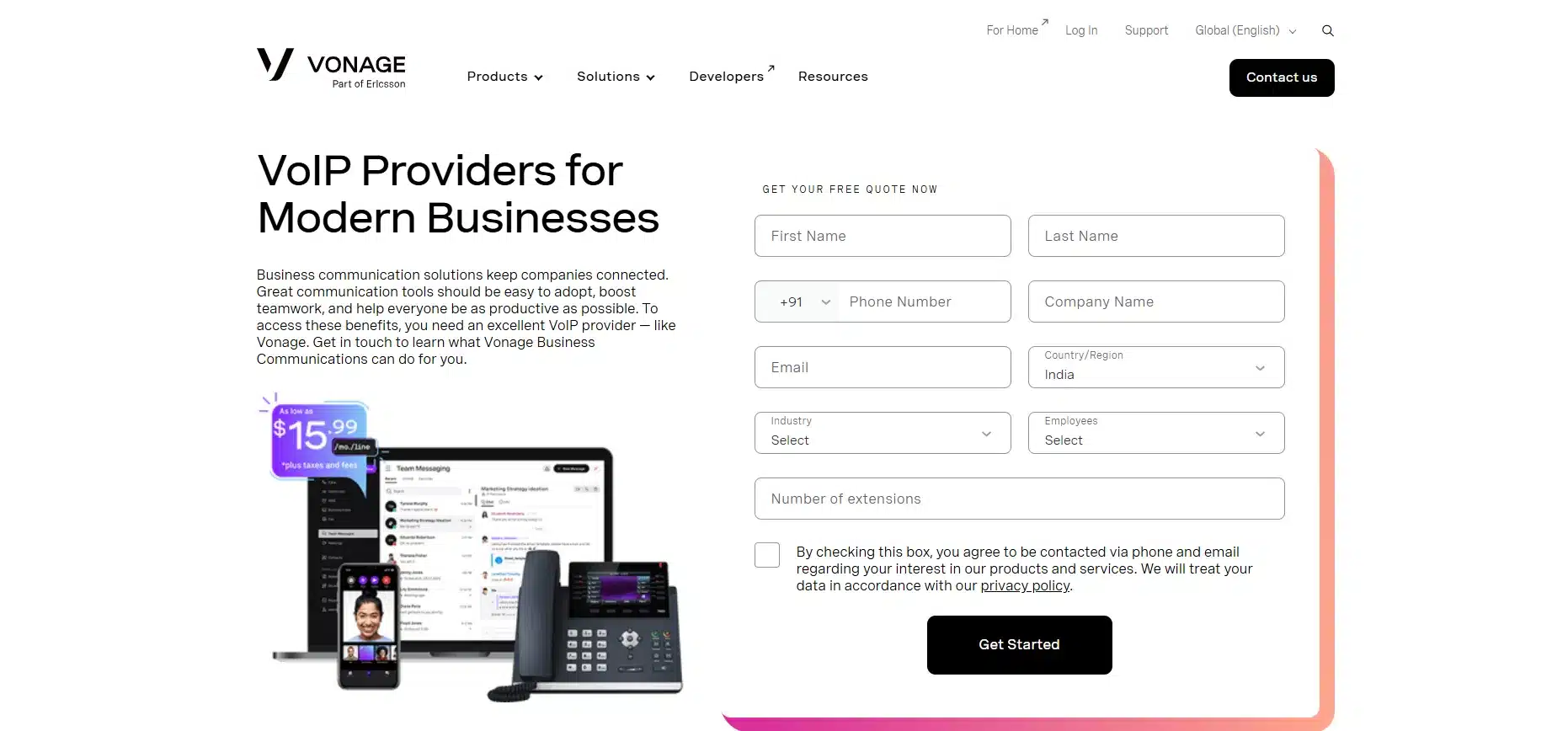
Vonage includes essential phone features in its base pricing and offers most advanced features as add-ons, letting small companies scale spend as they grow rather than paying for a fully-loaded plan up front.
Best for: Small companies wanting to scale feature spend gradually
Pricing: Custom, add-on-based pricing
Pros:
- Pay only for the advanced features you need
- Affordable rates for solopreneurs on mobile-first plans
Cons:
- Add-on model means costs can climb as you add features
#10 Dialpad – Best for AI Call Intelligence on a Budget
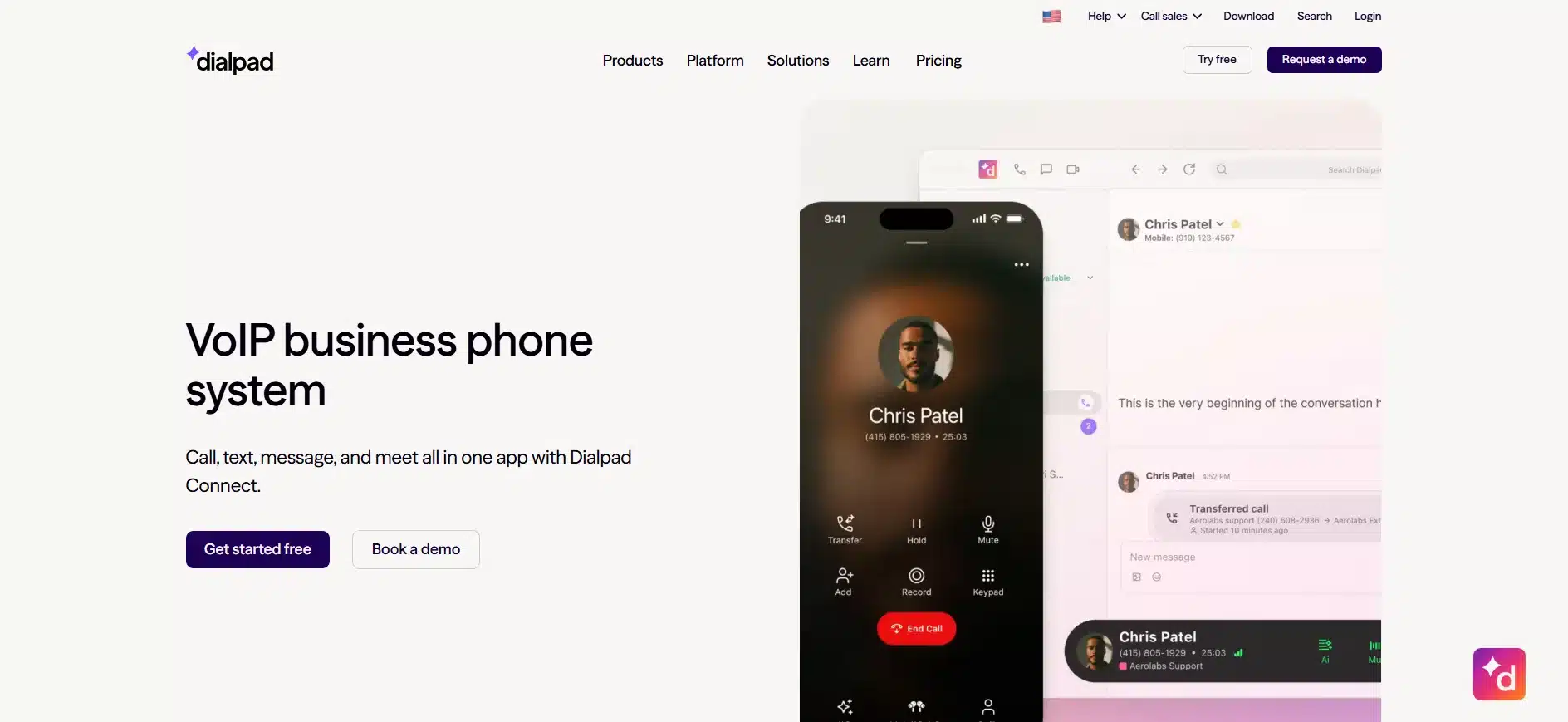
Dialpad leans on AI transcription and call intelligence as a core differentiator, offering strong AI-driven value at a budget-conscious entry price for small and mid-sized teams.
Best for: Budget-sensitive SMBs wanting AI transcription and insights
Pricing: Standard from ~$27/month; Pro from ~$35/user/month
Pros:
- Strong AI transcription and call intelligence at entry pricing
- CRM integrations (Salesforce, HubSpot) on the Pro tier
Cons:
- Real monthly cost typically runs a few dollars higher per seat after taxes/fees
- Desk phones not bundled free
Conclusion
VOIP is very important tool for a business located in different countries and require cost effective communication medium for their employees. As the technical requirements are increasing daily, VOIP is sure to improve and get more features to enhance the way we communicate of IP. Not only would they help to improve existing media but they also carry forward old devices to the new communication era. With VOIPS covering over 40% of European markets and with emerging mobile technologies the future seems brighter.
FAQ’s
Which is the best VoIP provider for a small business?
1) RingCentral
2) Aircall
3) Nextiva
4) Dialpad
5) Zoom Phone
6) GoTo Connect
7) Vonage
9) Ooma Office
9) Telzio
10) Grasshopper
Is VoIP worth it for a small business?
Yes, VoIP typically costs less than a traditional landline, adds features like auto attendants and call analytics, and scales without new hardware as your team grows.
What should I look for before switching to VoIP?
Check integration support for your existing CRM/helpdesk tools, confirm total monthly cost including add-ons (not just the advertised starting price), and test real call quality on a trial before committing to an annual plan.