

Most people buy a heater expecting it to do one thing: make a room warm. And on the surface, every heater seems to do exactly that. So why are infrared heating panels increasingly being chosen over conventional heaters? The answer comes down to how heat is delivered, and that difference matters far more than most people realise for your comfort, your energy bills, and even your health.
This article breaks down how infrared heating panels actually work, how they compare to conventional heaters at a fundamental level, and what the real benefits are for everyday users.
How a Normal Heater Works
Before you can appreciate what makes infrared panels different, it helps to understand what a conventional heater is actually doing.
Standard heaters, fan heaters, oil-filled radiators, convector heaters, and electric panel heaters all operate on the same basic principle: they warm the air. A heating element gets hot, air molecules in contact with it gain energy and rise, cooler air moves in to replace them, and the cycle continues. This process is called convection.
Warm air rises, making ceilings warm while lower areas stay cool. That is not an incidental quirk; it is the fundamental physics of convection heating, and it means that the warmest part of any conventionally heated room is typically the part nobody is sitting in. You then have to run the heater longer and harder to get the occupied zone of the room to a comfortable temperature, burning more energy in the process.
There is another problem. With convection heaters, hot air rises to the ceiling or escapes through gaps, forcing the system to work harder and less efficiently to keep you warm. Open a door, and a significant portion of the warmth you have built up disappears within seconds. The heater has to start again.
How Infrared Heating Panels Work
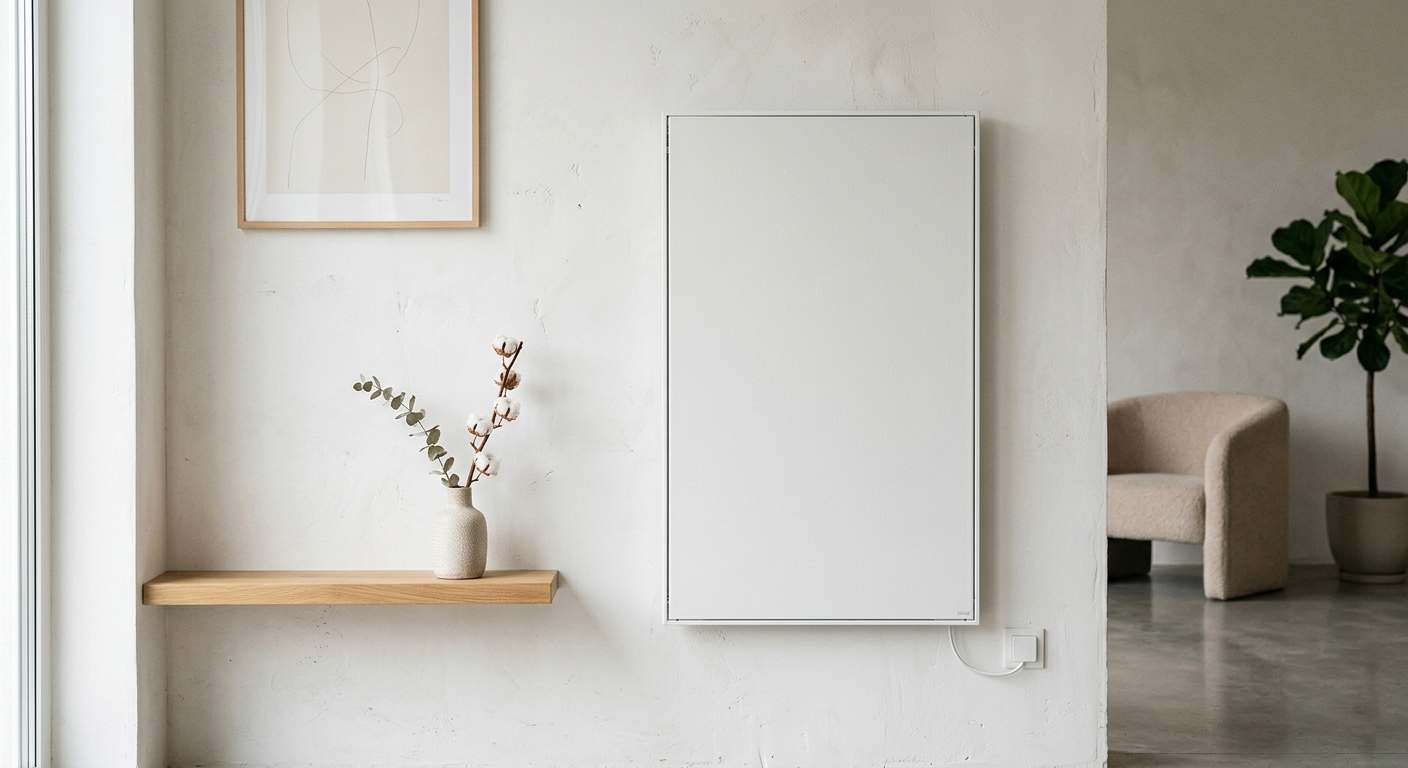
Infrared panels operate on an entirely different principle. Infrared heaters work like the sun, directly warming objects, walls, furniture, and people using radiating heat versus convection.
The panels emit electromagnetic waves at a specific wavelength in the far infrared range that pass through the air without warming it and are absorbed directly by solid surfaces: walls, floors, furniture, and the people in the room. The air itself is largely irrelevant to this process. What you feel when you stand in front of an infrared panel is not warm air; it is radiant heat absorbed directly by your body, the same mechanism that makes you feel warm when sunlight falls on your skin on a cool day.
When you enter an infrared-heated zone, you will feel warmth within seconds, just like when you step out into direct sunlight.
Once the objects and surfaces in a room have absorbed infrared heat, they continue to radiate it back into the space. Even after the heater is switched off, infrared warmth remains in the room because walls and floors release stored heat, allowing comfortable temperatures to continue without extra energy use. Conventional heaters provide no equivalent effect; the moment they switch off, the warm air cools and the room temperature drops.
The Core Differences, Side by Side
What actually gets heated
A conventional heater heats the air. An infrared panel heats objects, surfaces, and people. This sounds like a technical distinction, but it has very practical consequences for how warm you feel, how long it takes to feel warm, and how much energy is used in the process.
Speed of warmth
Infrared heaters often consume less electricity than conventional electric heaters, depending on how they are used. Both are rated in watts, but heat delivery methods affect real-world performance.
Critically, infrared panels reach operating temperature and begin delivering warmth within seconds of being switched on. A convection heater has to warm the air in the entire room before you feel comfortable, a process that can take 15 to 20 minutes in a cold space.
Energy efficiency
Infrared heaters are typically 20–50% cheaper to run than traditional systems. The reason is straightforward: infrared panels convert electricity into radiant heat at close to 100% efficiency, with no energy lost to heating unused air or warming ceiling space.
A 600-watt infrared panel can heat a similar space to a 1,500-watt convection heater, which illustrates the practical efficiency gap between the two technologies.
Heat retention after switch-off
Heated surfaces radiate warmth naturally, allowing comfortable temperatures to continue without extra energy use. This unique effect makes infrared heating highly efficient and gives it a clear advantage over conventional systems. With a standard heater, warmth disappears quickly once the unit is off.
Performance in draughty spaces
Infrared heating is ideal for draughty rooms as solid objects retain the heat. Because the warmth is stored in walls, floors and furniture rather than in the air, an open door or a draughty window has far less impact on comfort than it would with a convection heater. The infrared heat in the room’s surfaces does not escape; only the air does.
The Benefits of Using Infrared Heating Panels
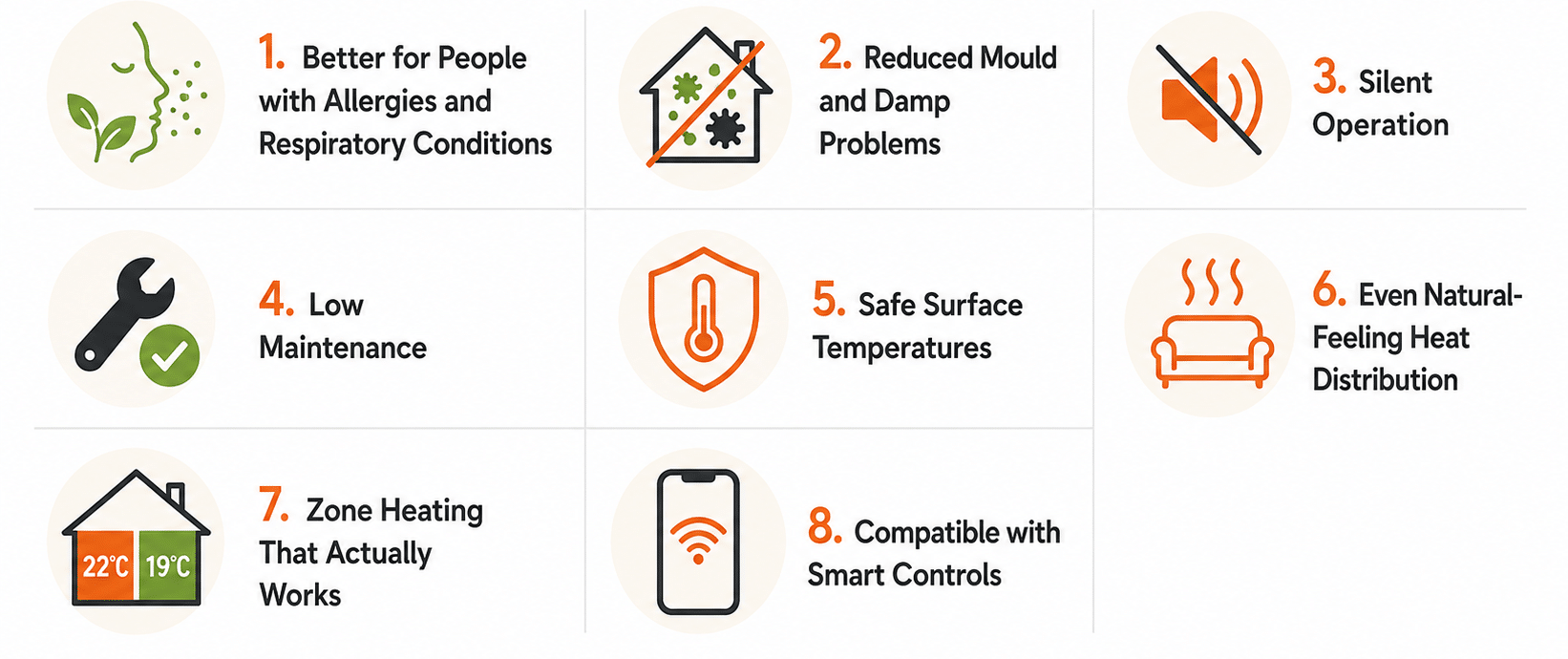
Better for People with Allergies and Respiratory Conditions
Since infrared panels do not circulate air, they do not spread dust, allergens, or bacteria, making them ideal for those with respiratory issues or allergies. The direct warmth also helps in maintaining a more stable humidity level, preventing issues such as mould growth.
Conventional convection heating stirs up whatever is in the air: dust, pollen, pet dander, mould spores, every time it runs. For allergy sufferers, asthma patients, or anyone who has ever noticed their symptoms worsen in a centrally heated room, this is not a minor issue. Infrared panels simply do not move air at all, so airborne particles are not disturbed.
For those already using healthcare wearables to track respiratory health, switching to infrared heating is one of the most impactful environmental changes you can make at home to complement that data.
Reduced Mould and Damp Problems
Infrared heating keeps walls and surfaces warm, preventing condensation from forming and stopping mould before it starts. This is one of the less obvious but genuinely important advantages of radiant heat.
Conventional heaters warm the air but leave wall surfaces cold, and when warm, humid air meets a cold wall, condensation forms. That moisture is what allows mould to grow. Because infrared panels warm the surfaces themselves, the temperature differential that causes condensation is eliminated.
Silent Operation
Infrared panels are silent compared to traditional radiators or gas heaters, which make noise when used, especially when they have integrated fans. Fan heaters are notorious for the constant background noise they generate. Infrared panels have no moving parts and operate in complete silence, making them well-suited to bedrooms, home offices, and anywhere noise is a concern.
Low Maintenance
Infrared heaters do not require any ductwork or vents, and the absence of moving parts translates to minimal maintenance needs. Unlike boilers that often require annual servicing and regular check-ups, infrared heaters rarely need attention once installed properly.
There are no filters to clean, no compressors to service, no fan motors to replace. Quality infrared panels have an average lifespan of around 30 years with essentially zero maintenance requirements.
When combined with smart scheduling, the result is a heating system that runs almost entirely on automation, with no manual intervention, no service calls, and no maintenance reminders cluttering your calendar.
Safe Surface Temperatures
Infrared heaters are safe to use, emitting no harmful gases, chemicals, or fumes. They produce natural heat similar to sunlight but without dangerous UV rays. Many infrared heaters feature cool-to-the-touch surfaces and automatic shut-off systems to prevent overheating or fires. This makes them a significantly safer option around children and pets compared to fan heaters with exposed heating elements.
Even Natural-Feeling Heat Distribution
Infrared heating produces a uniform heat that warms individuals and things directly, creating a more comfortable atmosphere where the heat is more evenly dispersed throughout the room and feels more natural than the often uneven warmth provided by forced air or radiators.
The common experience of being too warm near a conventional heater and too cold on the other side of the room is largely absent with infrared panels, because the heat is distributed through the surfaces of the room rather than concentrated in the air near the heat source.
Zone Heating That Actually Works
Infrared heaters can heat only occupied rooms, cutting unnecessary usage. Because the warmth is delivered directly and immediately, you can run a single panel in the room you are using without needing to heat the rest of the property.
With a conventional central heating system, you are typically heating every room whether anyone is in it or not. The zoning benefit of infrared is real and significant over a full heating season.
Compatible with Smart Controls
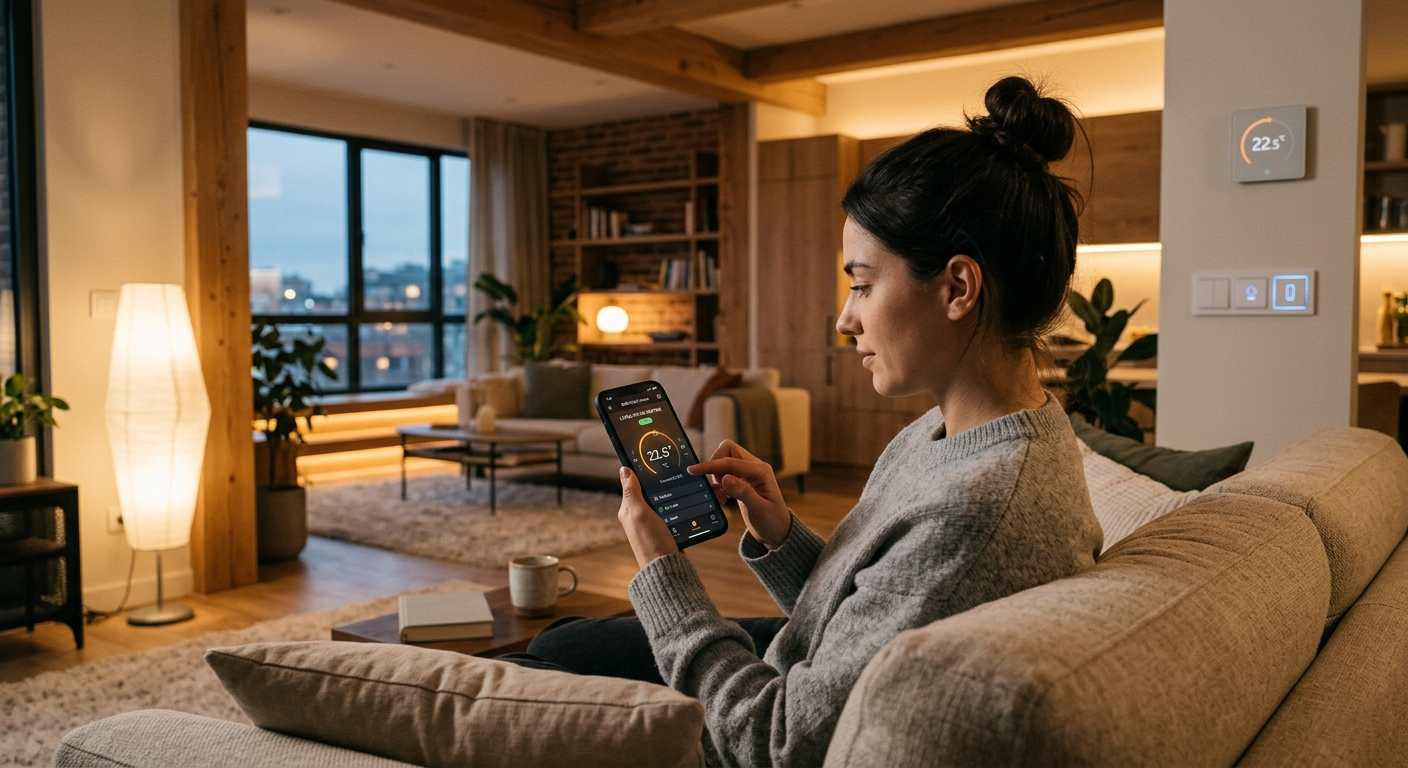
Infrared panels are one of the easiest heating solutions to integrate into a wider smart home setup; they require no specialist infrastructure, just a compatible thermostat and a Wi-Fi connection.
When paired with a programmable Wi-Fi thermostat, infrared panels become even more efficient. This makes infrared panels a natural fit for anyone already investing in smart home devices; they integrate cleanly into any connected home setup without additional hardware.
You can schedule heating to specific rooms at specific times, monitor energy use in real time, and control everything remotely from a smartphone.
Because infrared panels respond instantly, smart scheduling works cleanly; you are not waiting for a system to warm up before it reaches the programmed temperature. The panel heats the moment it switches on and stops the moment it is no longer needed.
Wall-Mounted Panels vs. Portable Units: Which Should You Choose?

Wall-mounted infrared panels are the most efficient installation for permanent use in a room. Ceiling mounting provides the most even heat distribution across the floor space, while wall mounting works well in rooms with higher ceilings or irregular layouts.
That said, not every heating need is permanent. If you need targeted warmth in a specific spot, a home office, a workshop, a covered outdoor entertaining area, Portable Infrared Heaters offer the same radiant heat technology in a freestanding format that can be moved wherever it is needed. The physics is identical to a fixed panel: you feel the warmth directly and immediately, without waiting for the surrounding air to heat up.
What to Look for When Choosing an Infrared Panel
Wattage for your space: Well-insulated rooms typically need around 80–100 watts per square metre. Older properties or rooms with poor insulation may need closer to 120–150 watts per square metre. Ceiling-mounted panels generally need slightly less wattage than wall-mounted ones because they distribute heat more evenly downward.
Build quality and warranty: Given that quality infrared panels are expected to last around 30 years, the build material and manufacturer’s warranty matter. Look for panels made from durable, recyclable materials with a solid warranty backing the efficiency claims.
Smart thermostat compatibility: If energy efficiency is a priority, confirm the panel can be paired with a programmable thermostat or smart home system. Without scheduling, you lose a significant portion of the efficiency advantage infrared technology offers.
Safety certifications: Ensure any panel you buy carries a relevant electrical safety certification for your region. Reputable suppliers will make this information readily available.
Final Thoughts
The difference between infrared heating panels and conventional heaters is not a matter of degree it is a matter of fundamentally different physics. Conventional heaters warm the air, which is inefficient, slow, prone to draughts, and problematic for air quality. Infrared panels warm people and surfaces directly, delivering instant comfort at significantly lower energy consumption, with no air circulation, no maintenance, and no noise.
For anyone reconsidering their heating setup, the question is not really whether infrared panels are better than conventional heaters. The evidence on efficiency, air quality, comfort and longevity makes that case clearly. The practical question is which type of infrared solution, fixed panel, ceiling-mounted, or portable, fits your space and how you use it.
FAQs
Yes. In a reasonably well-insulated home with correctly sized panels, infrared can work as a complete standalone heating system with no backup needed. In older properties with poor insulation, addressing draughts will improve performance, but the panels themselves are fully capable of being your primary heat source.
Near infrared produces a visible orange glow and heats intensely in a focused zone — better suited to outdoor or spot heating. Far infrared is invisible, gentler, and distributes warmth evenly across a room by warming surfaces and people directly. For indoor home heating, far infrared panels are always the right choice.
Yes. Quality far infrared panels have cool-to-touch surfaces, no exposed elements, and no hot grilles. The infrared wavelength used is the same warmth your body naturally emits it is not harmful radiation. Ceiling mounting removes any contact risk entirely, making it one of the safer heating options for family homes.
Yes, provided the panel carries the correct IP rating for wet zone installation. Many manufacturers produce bathroom-specific models rated IP44 or higher. Infrared is actually ideal for bathrooms, it warms walls and tiles directly, reducing condensation and damp, and reaches comfortable warmth almost instantly for a space you use briefly.
No. With no moving parts, compressors, fans or internal fluid systems, there is nothing that degrades over time the way a boiler or heat pump does. The only maintenance needed is an occasional wipe to remove surface dust. This is why reputable manufacturers confidently quote 30-year lifespans something no mechanical heating system can match.
None. Far infrared panels operate at a wavelength identical to the natural warmth your own body emits and to sunlight on skin, your body is already adapted to it, unlike UV, far infrared causes no skin damage. At domestic wattages, there are no known health risks, and the warmth has actually been studied for benefits including improved circulation and muscle relaxation.