


At Davos earlier this year, Anthropic’s CEO Dario Amodei said something that scared every developer in the Slack channel. He suggested AI could handle “most of what software engineers do end-to-end” within the next 6 to 12 months.
That’s not a statment from from a tech blogger, that’s the person who built Claude Code saying it out loud on a world stage. So yeah, the fear is real. And dismissing it with a breezy “don’t worry, you’ll be fine” doesn’t help anyone.
Here’s the thing though the actual data tells a more complicated story. One that’s worth understanding before you spiral into a career crisis or, on the flip side, before you assume everything’s totally fine and nothing needs to change. Because neither extreme is quite right.
What the Numbers Say (And They’re Genuinely Surprising)
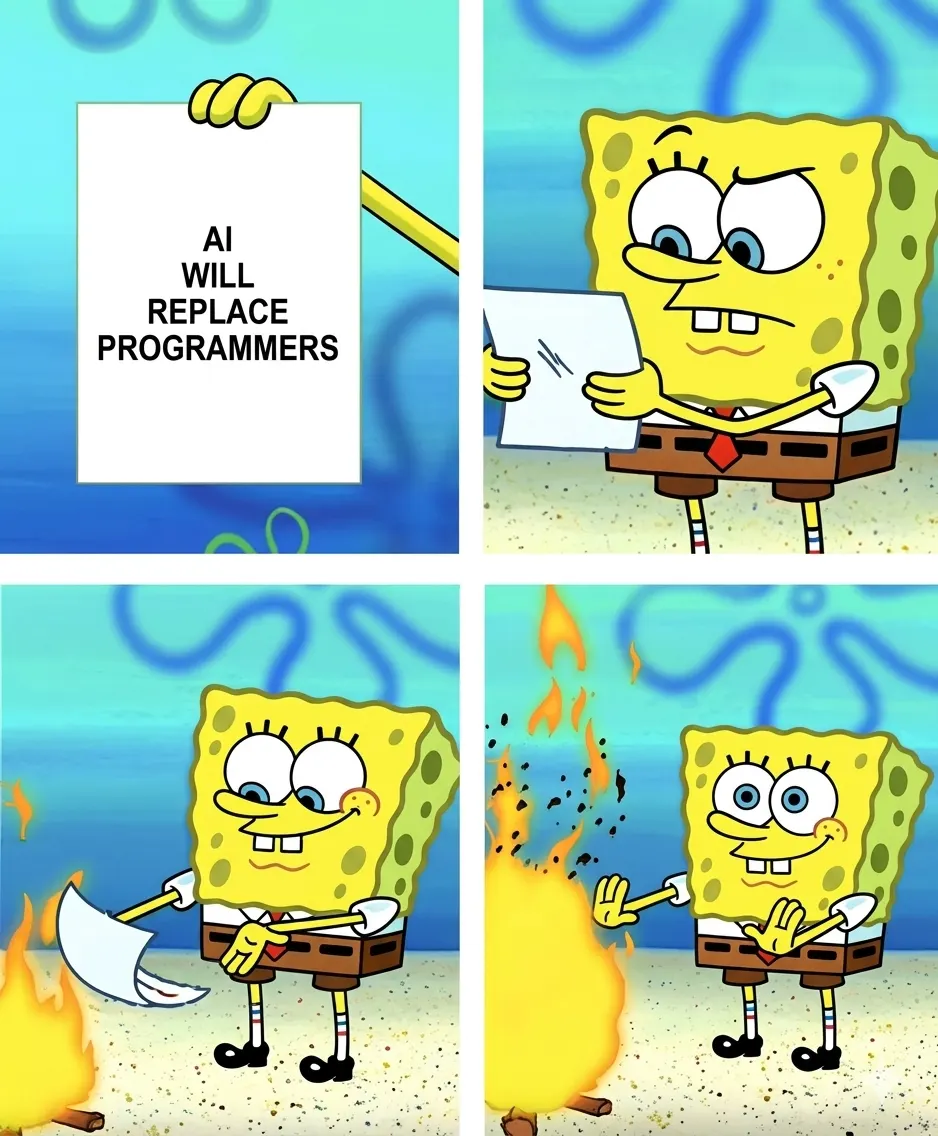
Let’s start with something that sounds contradictory: roughly 50% of code written today is AI-assisted, yet the U.S. Bureau of Labor Statistics is projecting 17% job growth for software developers through 2033. That’s faster than the average for all occupations.
How does that make sense?
Well, Sundar Pichai revealed that about 25% of Google’s code is now AI-generated. Did Google lay off its engineering teams? No, they said AI was about velocity, not headcount cuts.
About 82% of developers now use AI tools like Claude Code, OpenAI ChatGPT Codex and Cursor, but here’s the kicker: only around 30% of AI-suggested code gets accepted without edits. Someone still has to review it, refine it, and own it.
So, AI is making software cheaper to build, which means more companies, startups, enterprises, and non-tech businesses are building software they couldn’t justify funding before. More software being built means more need for people who understand how to build it well.
What AI Can Do, And Where It Genuinely Falls Flat
AI is legitimately excellent at certain things. Boilerplate code? Sorted. CRUD functions, SQL queries, generating UI components, writing documentation, catching bugs in repetitive logic these are now faster with a good AI tool than without one. GitHub Copilot, Cursor, and Claude Code are making junior-level, well-scoped tasks significantly easier.
But there’s a clear ceiling, and it appears pretty quickly once the problem gets complex.
Ask an AI to design a distributed payment system that complies with PCI-DSS regulations while integrating with a legacy banking API written in COBOL, and suddenly, the confident autocomplete starts producing expensive nonsense.
AI doesn’t understand your business. It doesn’t know that the sales team made a verbal promise to a client that contradicts what’s in the spec. It can’t sit in a meeting, sense the political tension between two product managers, and make a judgment call about which architectural trade-off actually matters.
Think of it like a calculator and an accountant; calculators automated arithmetic in the 1970s. Accountants didn’t disappear; they stopped doing manual sums and started doing more strategic financial work. The job transformed. The people didn’t vanish.
So Who’s Actually Most at Risk Right Now?
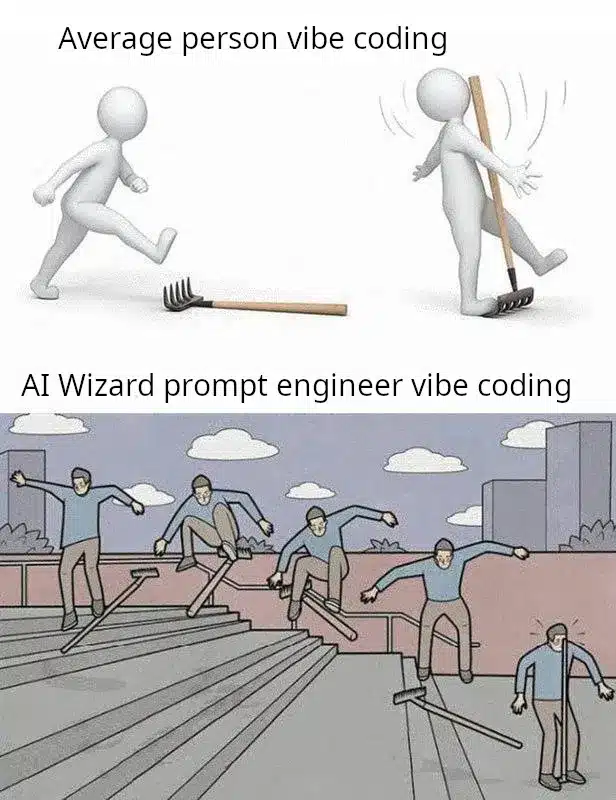
Junior developers are facing real headwinds. Entry-level job postings in software have declined noticeably since 2024, and AI is part of that story. The routine, isolated tasks that used to be a new grad’s training ground writing simple CRUD endpoints, generating basic front-end components, fixing well-defined bugs those are exactly what AI does best.
A survey of around 550 developers found that 30% believed AI would replace meaningful portions of their current work. Anxiety skews younger and more junior for good reason.
Web developers in particular are feeling pressure on the UI side. AI tools can generate decent front-end code from a description or a Figma file. That’s a real shift. But, and this matters knowing what to build, why users behave a certain way, and how to translate a half-formed business goal into a coherent product experience? That’s still stubbornly human.
Senior engineers with deep domain expertise, though? Genuinely resilient. If you understand the compliance maze in healthcare software, or you know how embedded systems behave in real-time environments, or you can architect a financial platform that needs to hold up under regulatory scrutiny, no AI model is replacing you anytime soon. The more a role demands contextual judgment baked from years of industry experience, the safer it is.
The honest summary: AI is compressing the entry point into software development while simultaneously raising the ceiling on what experienced engineers can accomplish.
Programming Isn’t Dying, It’s Done This Before
Software development has been through “automation will kill the craft” panics before, and the craft survived every time.
Assembly language gave way to high-level languages like C and Java. Did programmers disappear? No they stopped managing memory by hand and started building bigger, more ambitious things.
Stack Overflow automated the process of finding code answers; IDEs added autocomplete and syntax checking; frameworks like React and Django automated vast amounts of UI and backend scaffolding.
Each wave of automation expanded what developers could build, and the demand for developers expanded with it.
AI is the next wave of that same pattern. It’s not a different category of change; it’s a steeper version of something the industry has always absorbed. The WEF’s 2025 Future of Jobs report estimated that 39% of job skills will transform by 2030. Transform not evaporate.
Gartner puts it plainly: 80% of the engineering workforce will need AI collaboration skills by 2027. That’s an upskilling challenge, not an obituary.
The 5 Skills That Will Actually Matter Going Forward
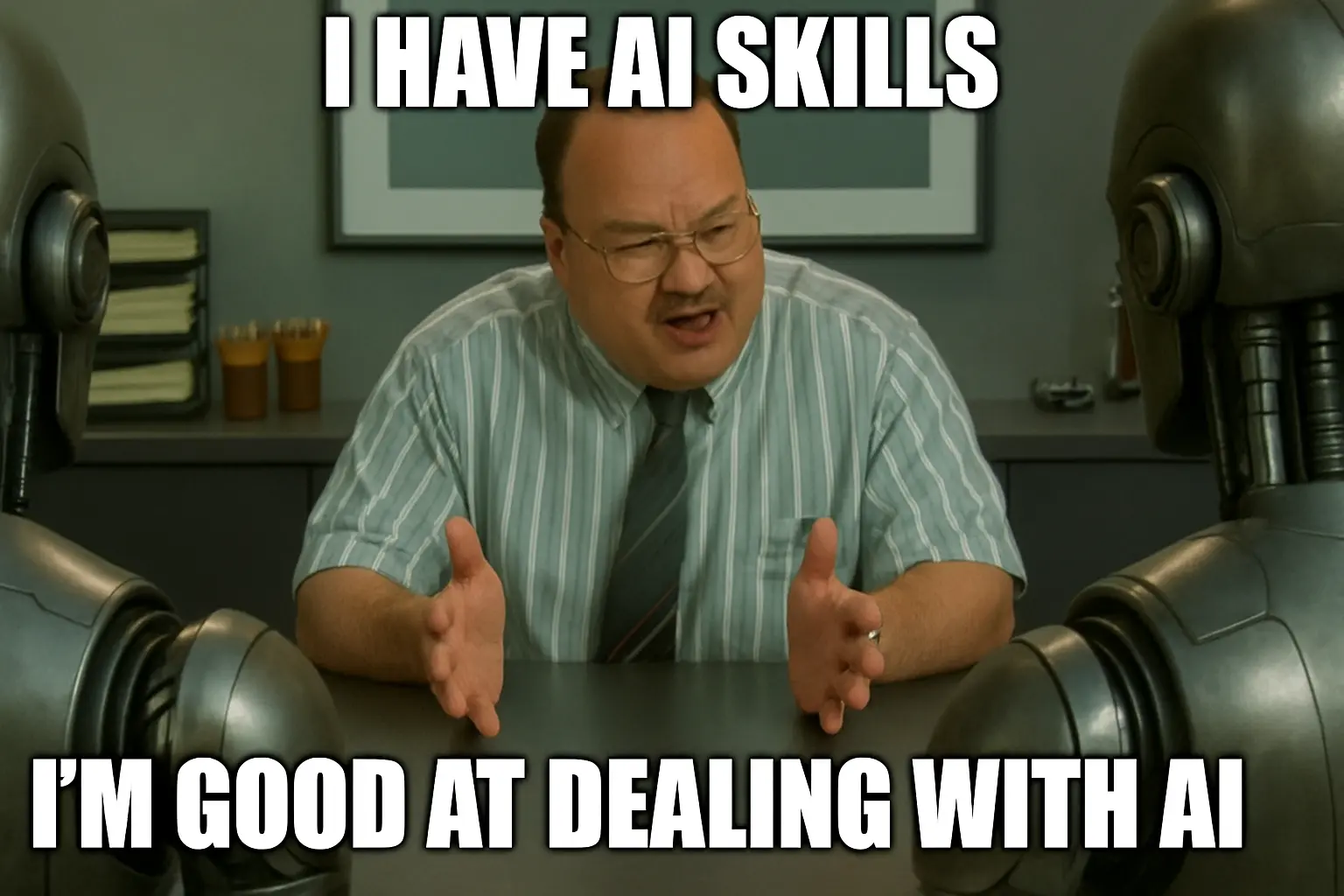
If you’re a developer or thinking about becoming one, here’s where your energy is better spent than worrying:
Systems thinking over syntax. AI writes functions. Humans design systems. The ability to look at a complex problem and architect a solution that’s scalable, maintainable, and actually fits the organisation that’s the skill the market is increasingly paying for.
AI fluency. Not just knowing that GitHub Copilot exists, but knowing how to use it well. Developers who can write sharp prompts, evaluate AI output critically, and catch subtle logic errors are already outperforming peers by meaningful margins in velocity metrics. “Having the right setup helps too, from a capable laptop built for development work to the right browser extensions.”
Domain depth. The more you know about fintech, healthcare, cybersecurity, or any regulated industry, the harder you are to replace. AI doesn’t have institutional memory. You can build it.
Knowing how to review AI code. This is the new debugging. Accepting AI suggestions without scrutiny is how bugs and security vulnerabilities sneak in. The ability to audit AI output quickly and accurately is genuinely valuable right now.
Communication. Honestly, this has always been underrated. Translating between what a business stakeholder wants and what a technical team can build is a uniquely human skill. As AI handles more of the execution, the people who can bridge that gap become more important, not less.
Final Words
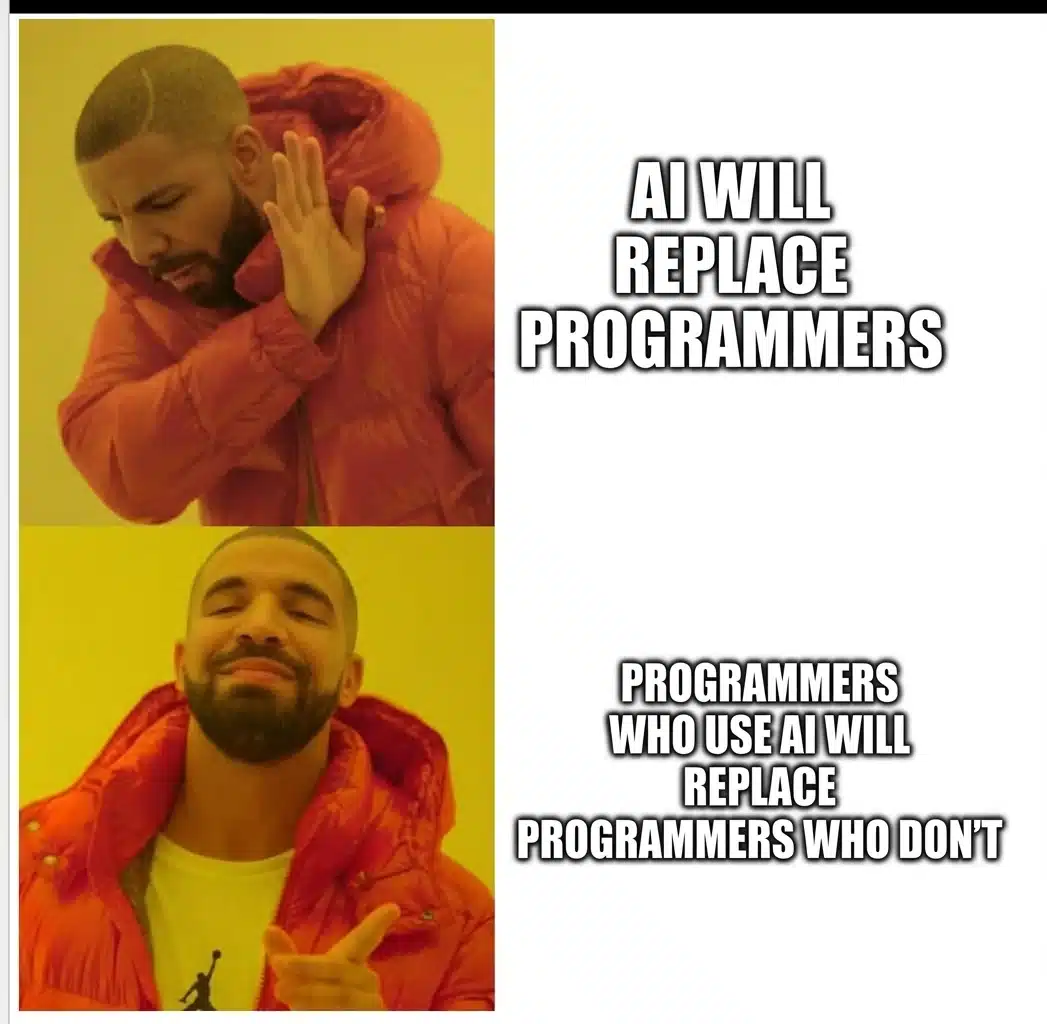
AI won’t replace programmers. But it’s very likely to replace programmers who don’t use AI and who don’t develop the judgment, depth, and communication skills that sit above what AI can do.
The developers thriving right now aren’t the ones panicking about Claude or Copilot. They’re the ones who’ve made those tools part of how they work and then pushed their own skills into territory AI genuinely can’t reach. They’re architects, problem framers, domain experts, and translators between human intention and machine execution.
The code is changing. The craft isn’t going anywhere.
FAQs
Entry-level and junior developer roles face the most immediate pressure. Routine tasks, CRUD endpoints, UI components, and simple bug fixes are exactly what AI tools do well. Web developers handling pure front-end code generation are also feeling it. Roles with deep domain expertise (fintech, healthcare, cybersecurity, embedded systems) are far more resilient and remain in strong demand.
The most vulnerable roles are those built around repetitive, well-defined tasks with little need for judgment or human interaction, data entry clerks, basic IT support, junior developer roles that focus purely on routine coding, insurance underwriters, and telemarketers. The World Economic Forum estimates AI and automation will displace around 92 million jobs globally by 2030, but projects 170 million new roles will emerge in the same period.
Yes, but the smarter move is learning to code and learning to work with AI tools. Developers who combine programming fundamentals with AI fluency are already outperforming peers in productivity metrics and commanding higher salaries. Coding alone is a shrinking edge. Coding plus the ability to direct, review, and build on top of AI output is a growing one.
The skills that matter most are the ones AI can’t easily replicate: system architecture thinking, deep domain expertise, the ability to review and audit AI-generated code, prompt engineering, and cross-functional communication. Developers who can translate vague business requirements into technical solutions and who know how to use AI to execute faster are the most in-demand profiles in 2026.
Right now, mostly assist. About 82% of developers use AI tools weekly, but only around 30% of AI-generated code gets accepted without human edits. The model that’s emerging is the “AI-augmented developer”, one engineer doing the work that used to require two or three, with AI handling execution and the human owning judgment, quality control, and architecture. That’s assistance, not a replacement for now.
It’s a combination of factors and AI is only part of the story. The entry-level job market is at a roughly 37-year low. Companies over-hired in 2021–2022 and are now cautious. AI is also automating the kind of isolated, simple tasks that used to be a new grad’s training ground. Over 35% of entry-level roles now require 3+ years of experience. It’s a structural squeeze, not a permanent ceiling.